
Selecting the right workplace model is no longer a simple real estate decision. It directly influences cost efficiency, operational ease and how confidently a company can scale. Two popular options dominate today: coworking spaces and traditional leased offices. Both serve real business needs, yet their financial implications differ significantly. For businesses comparing coworking spaces with traditional office space for lease, understanding the full cost structure is critical.
Here is a clear, practical comparison to help organizations make an informed choice.
Why Coworking Is Gaining Business Preference
Modern coworking spaces have evolved into complete office space solutions. They offer ready-to-use work environments where infrastructure, maintenance and essential services are fully managed. Companies can access high-speed internet, reception support, housekeeping, meeting rooms and security without investing in setup or administration.
MyBranch follows this operationally efficient model, enabling businesses to establish their presence across more than 75 Indian cities with consistent service quality and minimal setup effort. This structure particularly benefits companies entering new markets or expanding through satellite offices.
The True Cost of Leasing a Conventional Office
A traditional lease often appears economical when evaluated only on a per-square-foot basis, but the actual financial commitment is wider. Organizations typically incur:
- Security deposit and brokerage
- Furniture, electrical and IT setup
- Monthly utility bills for internet and electricity
- Housekeeping and maintenance expenses
- Additional administrative or front-desk staffing
- Multi-year lock-ins that restrict flexibility
These expenses are often spread across different budgets, making the true monthly cost harder to track. When these costs accumulate, the overall monthly spend can exceed the price of a shared office space or a managed office arrangement.

A Common Operational Challenge for Growing Teams
Many businesses experience unpredictable changes in team size. In a leased office, unused desks become a recurring expense, while expansions require fresh investment and additional time.
Flexible workspace models avoid this rigidity. Companies can scale up or scale down seating as needed without worrying about excess space, operational overhead, or long setup timelines. This adaptability often results in tangible cost savings and more efficient resource utilization.
Cost Comparison: What Works for Which Business Stage?
Early-Stage Businesses and Startups
For startups and newly formed teams, controlling burn rate matters more than long-term customisation. Coworking spaces reduce upfront capital requirements by eliminating deposits, fit-out costs and long lock-in periods. Predictable monthly pricing allows founders to focus on product development, sales and hiring rather than office administration.
At this stage, flexibility outweighs ownership. Paying only for the seats in use keeps costs aligned with actual business activity.
Small to Mid-Size Teams (10–50 Members)
As teams grow, workspace needs evolve quickly. Coworking and managed office models continue to offer strong financial efficiency by allowing organisations to add or reduce seats without restructuring their real estate commitments.
Leased offices at this stage often result in unused space during slower periods or sudden capacity constraints during growth phases. Flexible workspaces prevent both scenarios, keeping real estate spend proportional to team size and revenue momentum.
Rapidly Scaling or Multi-City Operations
Businesses expanding into new cities or setting up satellite offices benefit significantly from coworking models. Instead of committing capital and time to multiple leases, companies can establish operational presence immediately.
The cost advantage here is not just financial—it is strategic. Faster market entry, consistent infrastructure and centralised operational control reduce both direct costs and expansion risks.
Established Enterprises with Stable Headcount
For organisations with predictable team size, long-term business plans and the need for extensive customisation, leasing may become financially viable over time. However, this advantage only materialises when utilisation remains high and operational overhead is well-managed.
Even at this stage, many enterprises adopt a hybrid approach—maintaining a core leased office while using coworking spaces for project teams, regional offices or overflow capacity.
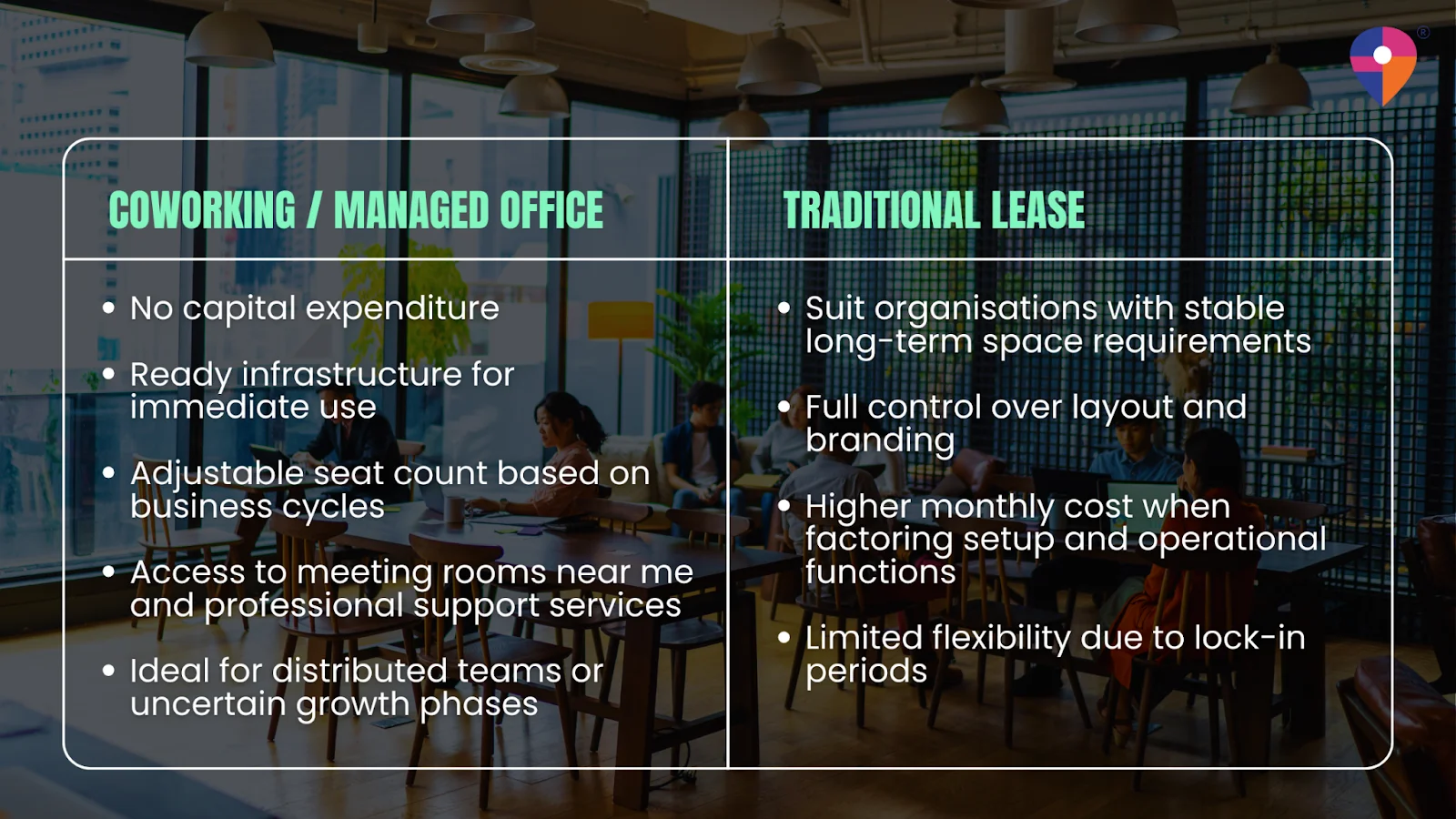
The most cost-effective workspace is the one that mirrors how a business actually operates. Coworking and managed offices align costs with growth, uncertainty and speed. Traditional leases align costs with stability and long-term certainty.
Choosing the right model is less about size and more about predictability.
Why Flexible Workspaces Continue to Lead
For many organisations, reducing operational distraction is as valuable as reducing rent. The market’s shift toward agility is clear. Companies prefer arrangements that minimise operational responsibilities while maximising productivity. MyBranch supports this shift through coworking, managed offices, private cabins, virtual offices and day-pass solutions that allow businesses to operate efficiently without administrative burdens.
Conclusion
Both models offer value, but each serves different operational priorities. Coworking and managed offices emphasise flexibility, speed and predictable monthly costs. Traditional leases emphasise control and long-term stability. The right choice depends on an organisation’s stage, growth patterns and resource commitments.