
Introduction
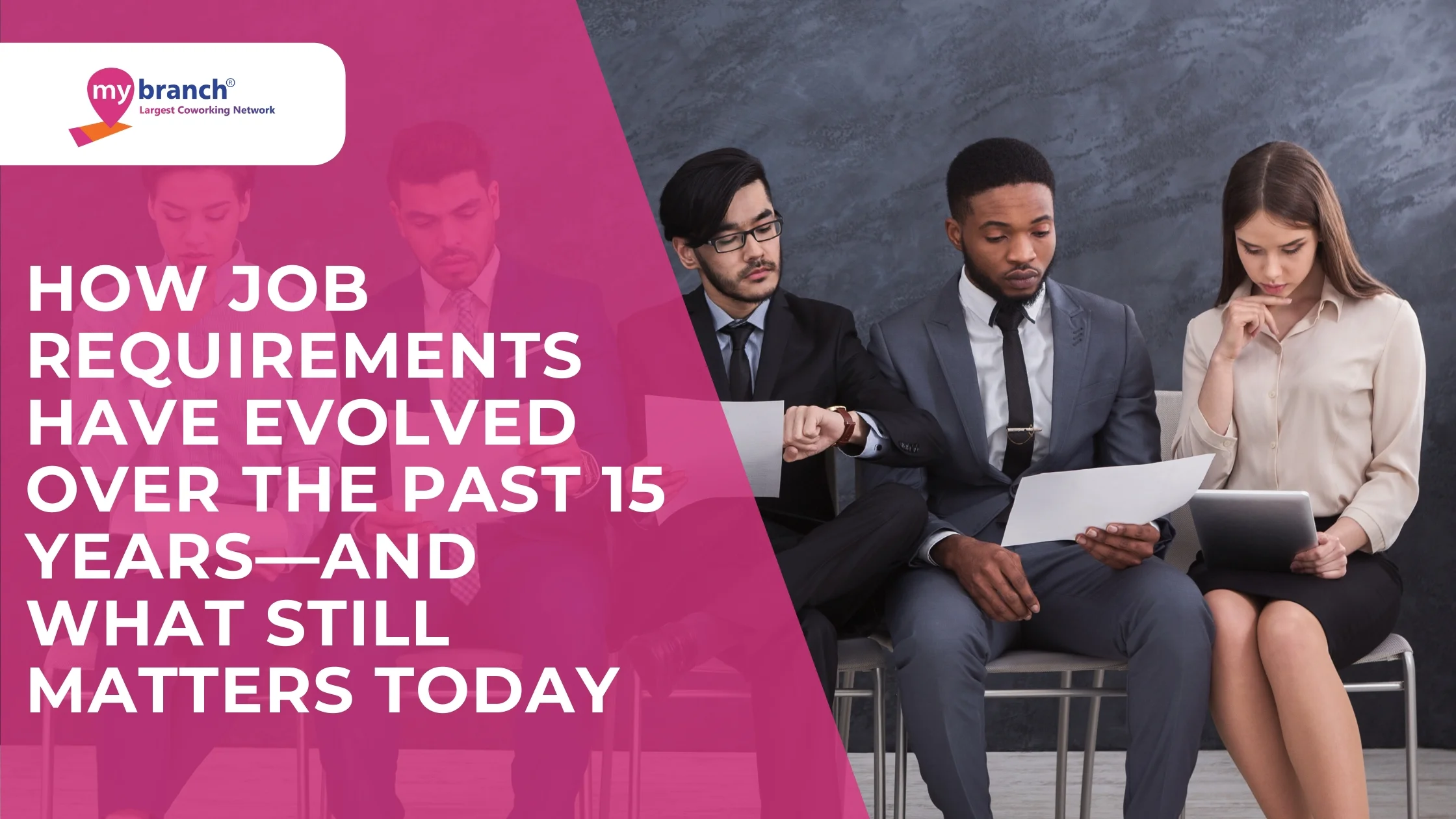
Fifteen years ago job requirements were relatively stable. Roles were clearly defined. Career paths followed a predictable order. Showing up consistently and staying put often mattered as much as performance.
Today the workplace looks very different. Teams move faster. Roles evolve quickly. Skills expire sooner. Yet while the surface of work has changed, the fundamentals that businesses value in people remain surprisingly steady.
At MyBranch we work closely with growing teams across stages. Observing how hiring expectations have shifted offers useful insight for founders and decision makers navigating modern work realities.
From Fixed Roles to Flexible Skill Sets
Earlier job requirements were built around narrow definitions. One role meant one responsibility. Progress followed a straight ladder.
Over time businesses began prioritizing range over rigidity. Today a growing team looks for people who can adapt, learn and contribute beyond a single function. Titles matter less than capability. Depth still counts, but flexibility often shapes hiring decisions.
This shift also explains why many teams now prefer managed office space that supports evolving roles rather than committing early to rigid setups.
Technology Changed the Tools Not the Expectations
Digital platforms, cloud tools and automation have transformed how work gets done. Smaller teams now achieve what once required larger structures.
Yet businesses still look for the same fundamentals. Clear thinking, ownership communication and reliability. Technology amplifies output, but it cannot replace judgment or accountability.
Research on global workplace trends, including insights from the World Economic Forum, highlights how adaptability and continuous reskilling are now ongoing expectations rather than one time milestones.
Many teams respond to this shift by choosing private office environments that offer focus while allowing room to evolve as responsibilities change.
What We Commonly See in Growing Teams
A growing team often begins with shared responsibilities and overlapping roles. Everyone contributes wherever needed. As the business stabilises roles become clearer but adaptability remains essential.
Teams that experienced this early flexibility tend to handle change better later. The mindset built during early growth stays valuable even as structures become more defined.
This is one reason why shared office space often aligns well with how modern teams grow gradually rather than all at once.
What Has Not Changed at All
Despite all the evolution some requirements remain constant:
- Taking ownership of work
- Communicating clearly with teams and clients
- Willingness to keep learning
- Respect for time and commitments
Degrees tools and titles may change but trust continues to drive long term success. Businesses still value people who deliver consistently regardless of where or how they work.
Closing Thought
Job requirements will continue to evolve. Tools will change. Roles will shift again. What stays constant is how businesses evaluate people over time.
For founders and decision makers the real focus lies in hiring for mindset as much as skill and creating environments that allow teams to adapt. Workspace decisions made today often influence how confidently a business scales tomorrow.