
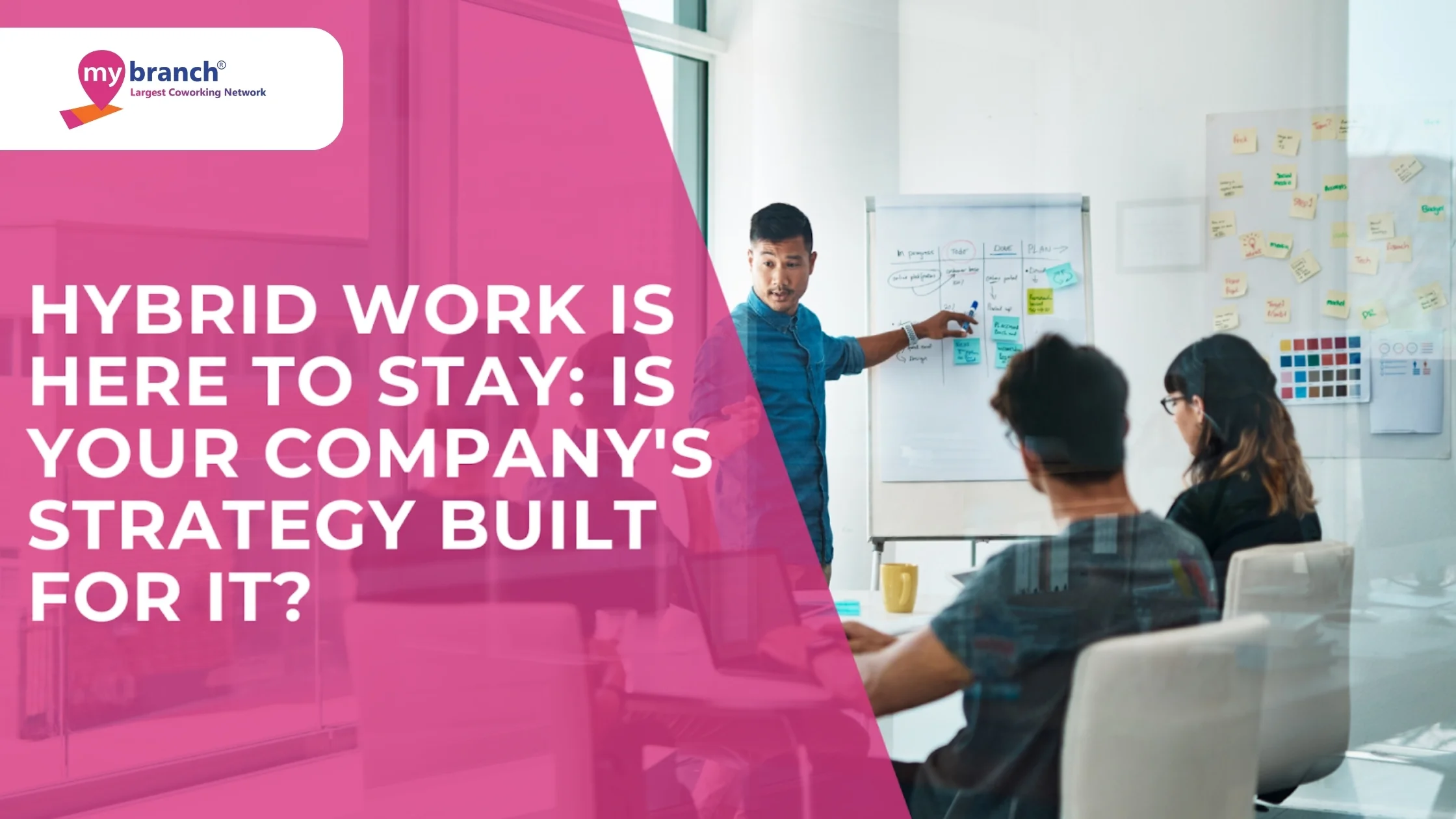
Hybrid work is no longer a temporary adjustment; it has become an established way of operating for organisations across industries. Teams now expect the flexibility to balance remote focus with meaningful in-person collaboration. As this shift becomes permanent, companies must examine whether their workspace strategy is built to support it effectively.
A strong hybrid model does more than manage attendance patterns. It shapes productivity, communication and the overall workplace experience.
Why Hybrid Work Requires a Clear and Structured Strategy
Hybrid work extends beyond choosing between home and office. It involves creating environments that support different types of work across different moments. Individual focus thrives in quiet spaces, collaborative tasks need professional meeting rooms and creative problem-solving often calls for dedicated brainstorming zones.
A well-designed hybrid strategy includes:
- Workspace flexibility that adapts to changing team sizes
- On-demand access to meeting rooms for important discussions
- Cost-efficient office space for rent without long-term commitments
- Reliable digital and physical infrastructure to ensure seamless operations
Without intentional planning, companies often see fragmented communication, reduced engagement and operational inconsistencies.
Related Article: Productivity Tips For Hybrid Work | For Employers And Employees
Here’s A Realistic Hybrid Scenario Many Growing Businesses Face
Consider a mid-sized startup where teams were allowed to work from any location. Initially, operations seemed smooth, but over time, new employees struggled to integrate, project discussions lost depth and team alignment weakened.
During a full team session held in a leased shared office space, productivity improved significantly. The structured environment encouraged clearer communication and better collaboration. This experience demonstrated that hybrid work does not function well without reliable physical workspaces that support key business moments.
Hybrid work succeeds when supported with purpose-built spaces, not when left unstructured.
Essential Workspace Requirements for a Sustainable Hybrid Model
Hybrid work only succeeds when flexibility is supported by reliable infrastructure. Without the right physical spaces, teams struggle to collaborate, onboard and maintain alignment. Instead of maintaining large, fixed offices, many organisations now rely on flexible office space solutions that adapt to changing needs.
Here’s a practical checklist of what a sustainable hybrid workspace must provide:
✔ On-Demand Meeting Rooms for Critical Moments
Even remote-first teams need in-person settings for strategy discussions, client meetings and performance reviews. Access to professional meeting rooms ensures these conversations happen in a focused, credible environment—without the cost of maintaining permanent conference spaces.
✔ Flexible Office Space That Scales With Attendance
Hybrid attendance is never fixed. Some days require collaboration; others need quiet focus. Office space for rent should allow teams to increase or reduce seating easily, ensuring businesses pay only for what they use and avoid underutilised desks.
✔ Locations That Support Distributed Teams
As companies hire across cities, access to office space near me becomes essential. Distributed workspaces allow employees to collaborate locally while remaining connected to the organisation, especially useful for regional teams and expansion plans.
✔ Environments Designed for Different Work Modes
Hybrid teams need more than desks. Quiet zones support deep work, while shared office spaces enable brainstorming and collaboration. A mix of focus areas and collaborative zones helps employees choose environments that suit the task at hand.
✔ Simple Commercial Terms Without Long-Term Lock-Ins
Hybrid strategies evolve. Workspace commitments should too. Short-term agreements, predictable pricing and minimal setup requirements allow organisations to adjust quickly as team size, locations or work patterns change.
When these requirements are met, hybrid work becomes structured instead of fragmented. Teams collaborate better, onboarding improves and productivity remains consistent—regardless of where employees work from.
Did you know? According to Microsoft’s Work Trend Index, hybrid employees now spend more time collaborating than ever before, with meeting time increasing by over 2.5× compared to pre-hybrid years. Companies that pair flexibility with intentional in-person collaboration spaces report stronger alignment and faster decision-making than those relying on remote work alone.
How MyBranch Supports the Future of Hybrid Work
MyBranch offers adaptable workspace solutions that align with the realities of hybrid work. With professionally managed environments, private offices, meeting rooms and customised Managed Office options, we ensure teams have access to the right infrastructure whenever required.
Our presence across multiple cities eliminates the frequent search for office space nearby, especially for expanding teams. MyBranch enables organisations to stay agile by providing spaces that suit focused work collaboration and client interactions without the burden of long-term commitments.
The objective is simple: to give businesses reliable workspace options that enhance employee experience and operational efficiency.
Strengthening Your Hybrid Work Strategy
Creating a future-ready hybrid framework requires balancing flexibility with structure.
Ask your organization:
- Do teams have dependable environments to collaborate
- Are workspaces aligned with the nature of tasks
- Can the company scale or adjust its workspace needs smoothly
Organisations that prioritise these aspects build stronger cultures and healthier long term performance.
Hybrid work is here to stay and workspace decisions will continue to shape employee productivity, engagement and satisfaction.
Explore how workspace infrastructure influences long-term business resilience and growth.