
Most SMEs begin their office search with the same confident belief:
If the rent fits the budget, the office fits the business.
On the surface, it sounds perfectly reasonable. Rent feels clear, predictable, and easy to calculate. But what most founders discover only after signing a lease is that rent is actually the simplest part of the equation. The real burden lies in the traditional office costs, the recurring, layered, and often invisible expenses that reveal themselves slowly, and usually too late.
Industry data shows that SMEs consistently underestimate commercial office expenses by 35–55%, largely because the hidden office costs of traditional setups aren’t visible during the decision-making process. These overlooked expenses directly chip away at SME profitability, creating the financial trap many businesses fall into without realizing it.
The Myth of “Cheap Rent”
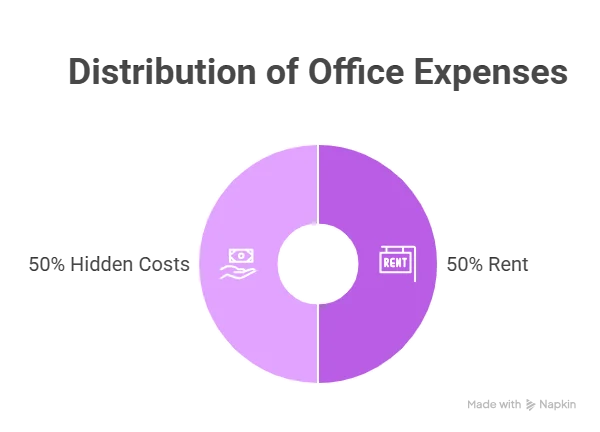
Rent may look like the biggest number on paper, but commercial real estate benchmarks show it represents only half of what an office truly costs to operate. The remaining spend comes from office overheads utilities, maintenance, consumables, repairs, and support services that slowly pile up each month. None of these hidden office costs appear in your initial calculations, yet they account for a large portion of recurring commercial office expenses.
What begins as a “budget-friendly office” gradually turns into a monthly financial stretch, not because rent increased, but because everything around it did. This is exactly why more SMEs are shifting to flexspaces and cost-effective workspace solutions like MyBranch. With a managed office model where all these scattered costs are bundled into one predictable monthly fee, businesses gain clarity, control, and cost stability from day one helping protect SME profitability instead of draining it.
Deposits & Lock-Ins: The First Financial Shock
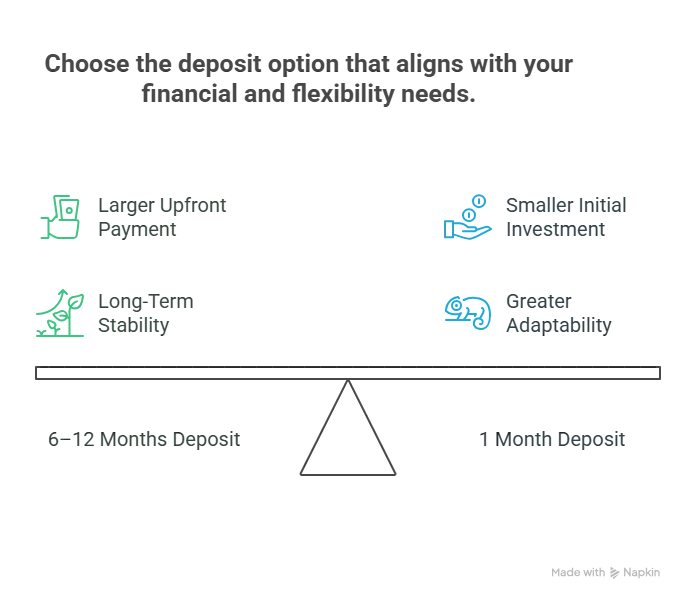
Most SMEs expect a modest security deposit. Instead, they’re met with a demand for six to twelve months of rent upfront capital that gets frozen instantly. For a small business, this isn’t just money sitting idle; it’s delayed hiring, delayed marketing, and delayed expansion. In many cases, this single factor has a direct impact on SME profitability, long before the office is even operational.
The next blow comes from long-term lock-ins, often stretching one to three years. These rigid agreements force SMEs to stay put even when the office no longer matches their business reality. If your team grows, you’re squeezed for space. If your team shrinks, you continue paying for empty seats. This mismatch alone leads SMEs to waste nearly 20–30% of traditional office costs annually.
This is exactly why the MyBranch Managed Office model feels like a relief to growing businesses. With minimal deposits, no heavy lock-ins, and a flexible office model that adapts as team sizes change, SMEs finally gain the breathing room they’ve never had with traditional workspaces.
Fit-Out Costs: The Silent Budget Breaker

Every founder starts with the intention of keeping interiors simple. But office fit-out costs have a way of expanding far beyond expectations. Furniture, lighting, cabling, security systems, signage, air-conditioning work, and partitions all these elements creep in one by one, and each new requirement adds another dent to the budget. In most cases, SMEs end up spending the equivalent of their entire annual rent just to make the traditional office setup functional.
What makes this even tougher is that this spend becomes irreversible. Once you invest heavily in commercial interior expenses and workspace capex, moving to a new location becomes financially painful. The more you spend on fit-outs, the more locked-in you feel, even when the office no longer supports your team size or business needs. For many SMEs, this becomes one of the most underestimated SME office challenges, quietly draining resources that could have fueled growth.
The Operational Drain That Never Ends

After settling in, the real drain begins. Internet bills, power backup, housekeeping, pantry items, maintenance, repairs, pest control, and building charges;none of these operational expenses are included in your rent, yet they hit your bank account every month. These seemingly minor but unavoidable office maintenance costs steadily increase your monthly spend by 18–25%, often without warning. They form a major chunk of the hidden office costs SMEs rarely anticipate.
Then there’s the effort required to manage all of this. Hire an admin, and you add a recurring salary. Handle it yourself, and you lose valuable hours coordinating vendors, chasing repairs, and resolving unexpected issues. Many SME founders end up losing nearly a full day each week to workspace management time that should be spent on customers, growth, strategy, and revenue. This facility management burden directly contributes to SME productivity loss, and over time, it affects both momentum and profitability.
The Final Cost: Lost Momentum
Traditional offices don’t just drain money; they drain focus. Teams get stuck dealing with interruptions of slow internet, repairs, overcrowded rooms, or unused space—while founders juggle vendors and maintenance instead of strategy and sales. In an environment where agility is everything, a rigid, self-managed office becomes a barrier to growth rather than a foundation for it.
The Smarter Shift: Flexspaces
Flexspaces eliminate deposits, remove fit-out costs, and convert unpredictable office spending into one transparent monthly fee. They adapt instantly to team size and give SMEs what they need most: financial clarity, operational freedom, and the ability to focus on the business instead of the building.
In today’s landscape, SMEs don’t lose profitability because their business model is wrongthey lose it because their office model is outdated.
Flexplaces fix that.