


A Smarter Perspective on Coworking and Finance
Coworking is often viewed as a flexible and efficient way to work but many businesses overlook the financial advantages it brings. Beyond convenience and ready to use infrastructure, a coworking membership can support better tax planning which is especially valuable for startups and growing teams.
Understanding these hidden benefits can help companies make informed workspace decisions that strengthen both productivity and financial efficiency.
Note: Tax treatment may vary based on business structure and applicable regulations. Businesses should consult their tax advisor for case-specific guidance.
1. Coworking Expenses That Lower Taxable Income
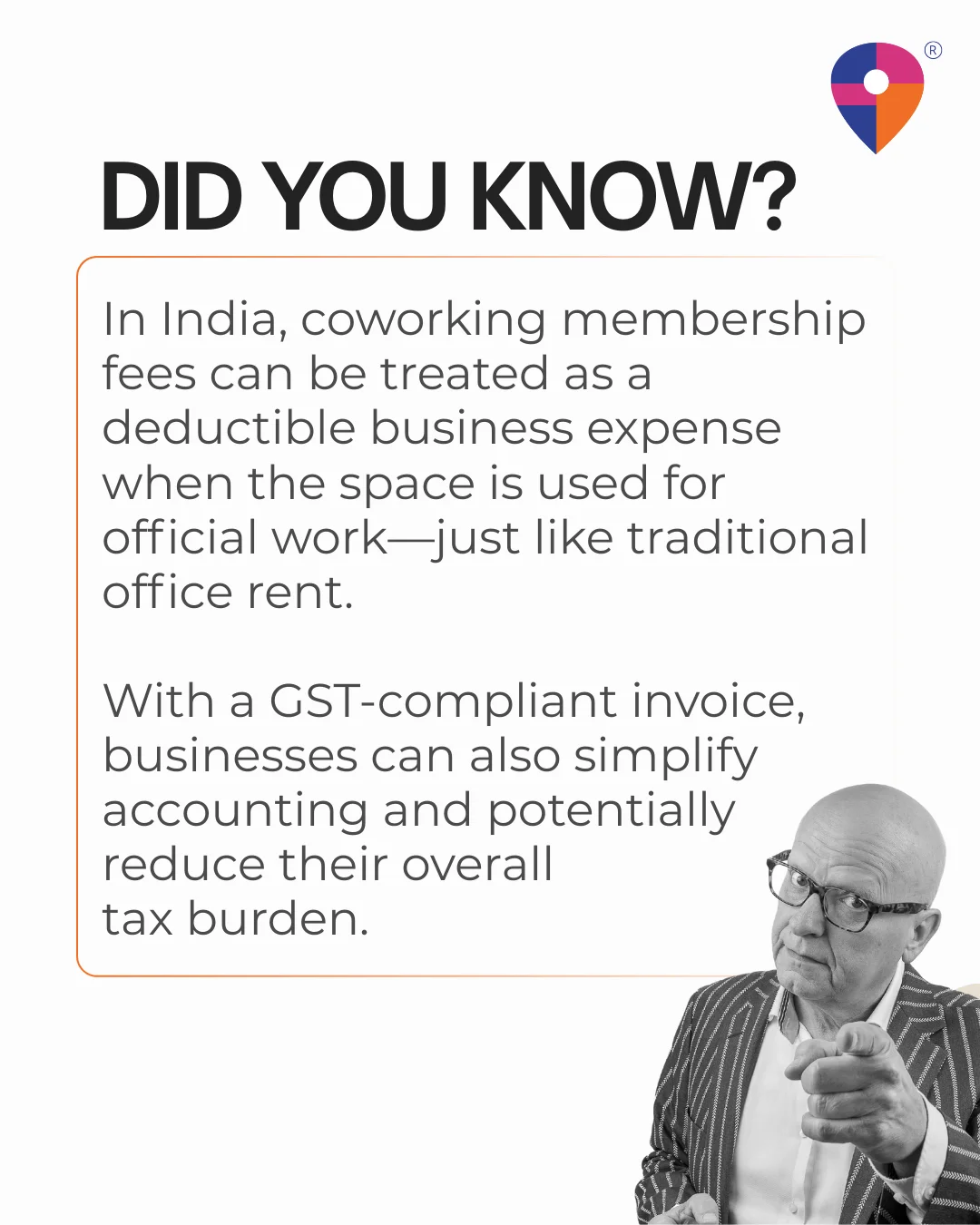
In most cases, coworking memberships can be treated as deductible business expenses when used for official operations. Since they function similarly to an office space for rent, the monthly fee for desks, cabins, meeting rooms or shared facilities can be recorded as an operational business cost.
This directly reduces taxable income. An added advantage is consolidated billing. Instead of maintaining separate invoices for utilities, internet, maintenance and housekeeping companies receive a clear unified invoice that simplifies accounting and compliance.
2. Additional Workspace Services That Are Deductible
Coworking environments provide several supplementary services that also fall under permissible business expenses. These may include:
- Meeting room bookings for client interactions or internal reviews
- Printing and office supplies
- Professional business address or virtual office address
- Administrative and support services provided on site
For organisations that operate with agility these deductions streamline expense management while ensuring efficient use of resources. These expenses are generally deductible when they are incurred wholly and exclusively for business purposes.
3. A Practical Scenario That Reflects Actual Challenges
Many businesses initially operate from home based setups and later discover complexities in claiming tax benefits. Calculating the percentage of rent and utilities used for work or meeting “exclusive use” criteria often becomes challenging.
When such businesses transition to a coworking space, the financial structure becomes far more straightforward. A dedicated environment combined with a single GST-compliant invoice makes it easier for accountants to categorise the cost as shared office space, resulting in clean books and reduced tax liabilities.
This clarity is one of the reasons many emerging companies prefer coworking over home-based work environments.
4. How MyBranch Supports Better Compliance and Documentation
MyBranch provides serviced workspaces, private cabins, virtual office services and meeting rooms across multiple cities. All offerings come with transparent documentation and clear GST-compliant invoices, which assist businesses in maintaining accurate financial records.
MyBranch ensures that workspace-related expenses are easy to classify and claim. The platform is designed to support businesses that prioritise flexibility without compromising financial accuracy.
5. Important Reminders for Businesses
To make the most of tax-related advantages, companies should ensure that:
- The coworking agreement clearly reflects business usage and service scope
- GST details and tax classifications are correctly mentioned on invoices
- Business details on invoices match statutory records
- Virtual office services are supported by proper documentation
Strong financial discipline ensures smooth deductions and compliance.
Conclusion
Coworking is not limited to convenience or flexibility. It is an intelligent business choice that can improve financial management, reduce overheads and optimise tax planning. For companies focused on sustainable growth, understanding these benefits can influence long-term operational decisions.