
For Global Capability Centers (GCCs), expansion decisions today look very different from a decade ago. The question is no longer just about adding headcounts or finding office space. It’s about resilience, continuity, cost discipline, and long-term scalability.
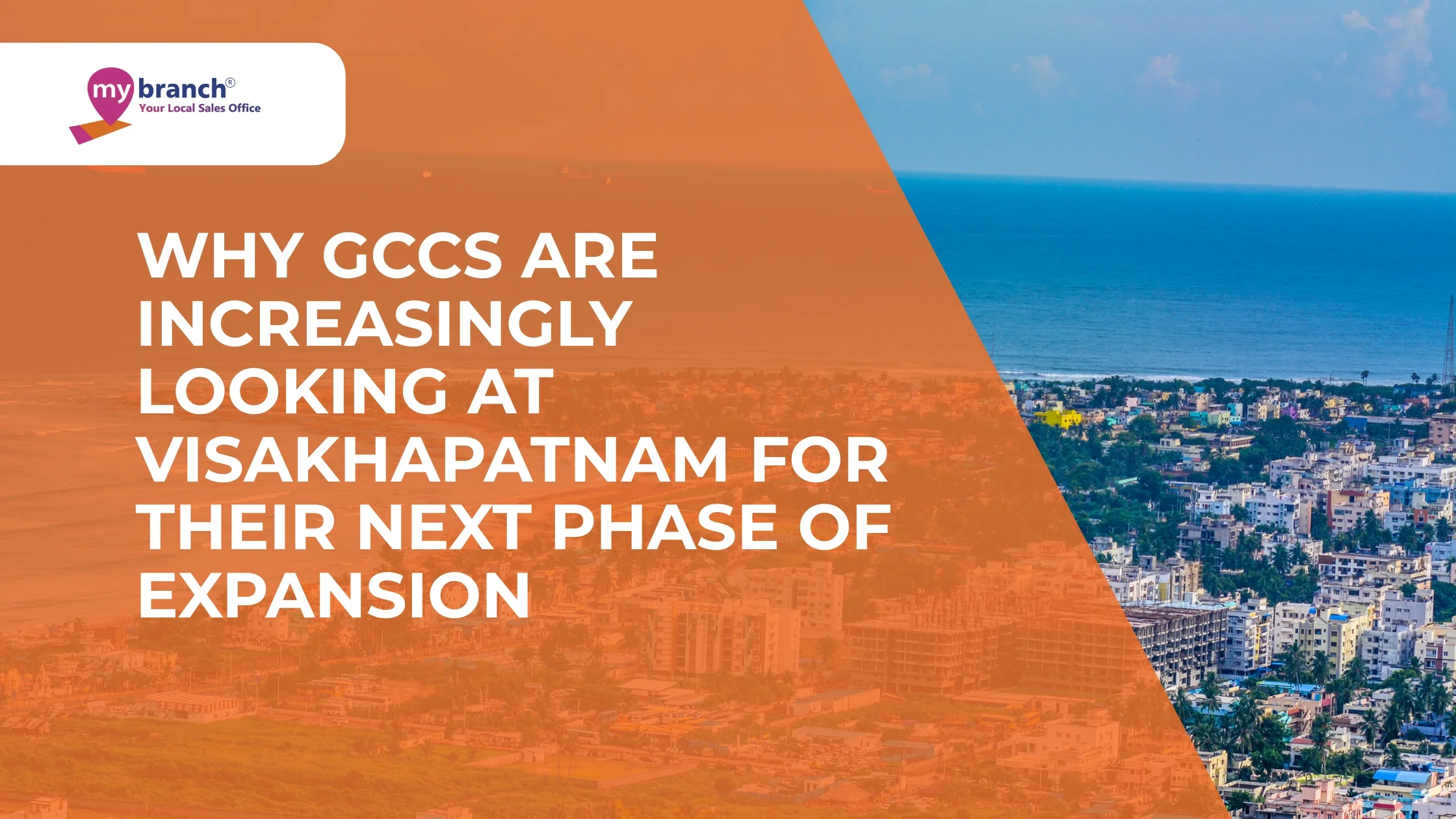
As metro markets mature and operational complexity increase, many GCC leaders are reassessing their location strategies. In that evaluation, Visakhapatnam is steadily moving from a “future option” to a serious, present-day consideration.
The Core Challenge for GCCs: Scale Without Instability
Most GCCs are built to support critical global functions; technology, analytics, finance, compliance, operations, and customer support. These functions demand stability more than speed.
However, traditional metro hubs are introducing new risks:
- Rising attrition that disrupts continuity
- Escalating real estate and operating costs
- Overcrowded infrastructure affecting employee experience
- Talent fatigue driven by long commutes and competitive churn
For GCCs, these challenges don’t just increase costs; they affect knowledge retention, process maturity, and service quality.
This is where Tier-2 cities like Visakhapatnam enter the conversation.
Talent Stability: A Key GCC Advantage in Visakhapatnam
One of the strongest reasons GCCs are evaluating Visakhapatnam is talent behavior.
The city produces a consistent pipeline of engineering and commerce graduates, supported by universities and technical institutions across Andhra Pradesh. More importantly, the workforce here demonstrates lower attrition and higher tenure compared to Tier-1 markets.
For GCCs, this means:
- Better knowledge continuity
- Lower retraining costs
- Stronger process ownership
- More predictable workforce planning
When centers are designed to run long-term global processes, this stability becomes a strategic advantage, not just an HR metric.
Infrastructure That Scales Without Operational Strain
Visakhapatnam offers a balanced infrastructure environment. IT zones, improving digital connectivity, reliable utilities, and supportive state policies provide a solid operational base without the saturation seen in metros.
For GCC teams, this translates into:
- Fewer disruptions
- Better employee experience
- Easier facility management
- Headroom for phased expansion
The city supports scale; without forcing organizations to navigate congestion, inflated costs, or operational noise.
Cost Discipline Without Compromising Governance
Cost optimization remains a key driver for GCC expansion. Visakhapatnam delivers meaningful advantages here:
- Lower office rentals
- Reduced facility and operations costs
- Competitive talent compensation
- Improved cost-to-output ratios
At the same time, governance standards, compliance requirements, and global audit expectations remain intact. GCCs do not have to trade professionalism for affordability.
This is also why many centers are moving away from traditional lease-heavy models toward Co-working setups. Rather than investing upfront in infrastructure; GCCs prefer environments that are compliant, secure, and ready from day one.
In this context, providers like MyBranch quietly support GCC expansion by offering managed offices in Visakhapatnam that allow teams to start operations quickly, scale in phases, and maintain governance without locking capital into real estate.
A Natural Fit for Distributed GCC Models
Modern GCC strategies increasingly rely on multi-location delivery models. Rather than concentrating all functions in one city, organizations distribute risk, talent, and operations across locations.
Visakhapatnam works well as:
- A secondary GCC location
- A specialized function center
- A support or continuity hub
- A satellite delivery unit linked to metro HQs
Its ability to integrate into distributed models makes it particularly attractive for GCCs focused on long-term resilience.
Why the Shift Is Happening Now
Several structural changes are converging:
- Pressure to reduce concentration risk
- Focus on employee well-being and retention
- Need for cost predictability
- Maturing Tier-2 ecosystems
- Policy support for decentralized tech growth
Visakhapatnam sits at the intersection of these trends, making it a timely and practical choice for GCC expansion.
A Measured, Strategic Expansion Choice
Choosing Visakhapatnam is not about replacing metros. It’s about strengthening the overall GCC footprint.
For global organizations seeking stability, cost discipline, and scalable operations, Visakhapatnam offers a compelling case especially when paired with workspace models that remove unnecessary operational complexity.
For many GCC leaders, the question is no longer if Tier-2 expansion makes sense, but where it can be executed thoughtfully.
Increasingly, Visakhapatnam is part of that answer.