
Working from home was supposed to be a win for everyone. Flexible schedules, fewer distractions and better balance sounded ideal, especially for younger professionals entering the workforce.
Yet, as months turned into years, many businesses began noticing something unexpected. While work continued, growth slowed. Engagement felt uneven. Young employees seemed present but not progressing at the pace leaders anticipated.
This shift has prompted founders and decision makers to rethink how work environments shape early careers.
Early Careers Depend on Everyday Exposure
Young employees do not just learn through assigned tasks. They learn by observing how teams function, how feedback is exchanged and how decisions are made in real time.
When work is entirely remote, these learning moments disappear. Questions that would have been casually asked get delayed. Feedback becomes formal and infrequent. Small misunderstandings take longer to surface.
For early stage professionals, this lack of exposure often translates into slower confidence building and limited skill acceleration.
Structure Is More Than a Routine
An office naturally creates structure. There is a clear start to the day, defined focus hours and a physical separation between work and personal life.
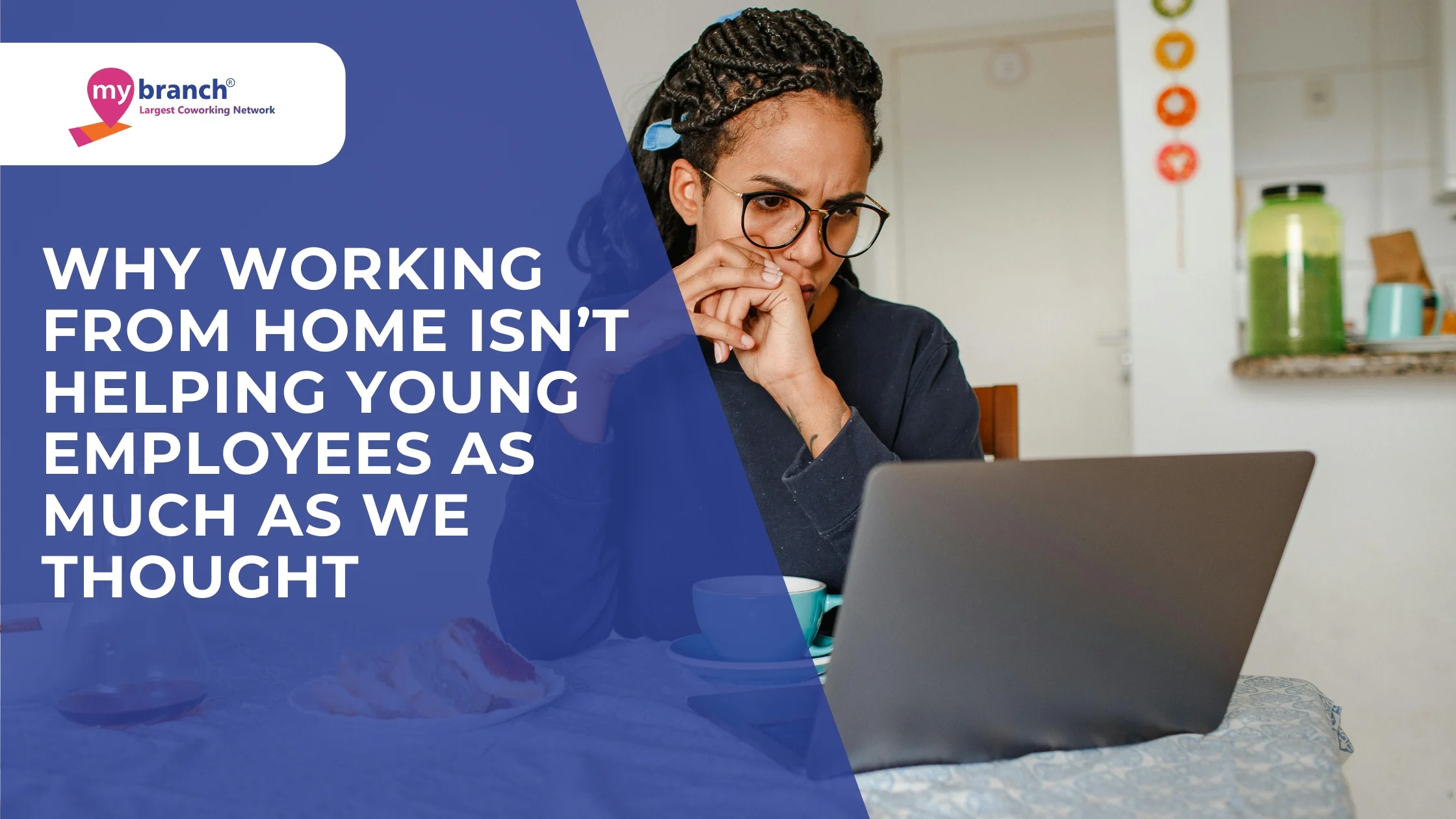
At home, these boundaries blur quickly. Many young employees struggle to switch off or stay consistently focused. Over time, this leads to fatigue rather than flexibility.
This is why businesses are now reassessing their office space solutions, not as a return to rigid setups but as a way to restore rhythm and accountability.
A Pattern We See Repeatedly
A growing team begins fully remote. Collaboration feels efficient at first. Over time, meetings increase. Conversations become transactional. Junior team members hesitate to speak up.
Eventually, leaders sense that something is missing. The team is working, but not learning together.
This is often when founders start searching for a coworking space near me as a middle ground rather than a full office comeback.
Why Shared Work Environments Matter
Shared workspaces offer presence without pressure. They allow young employees to work independently while being surrounded by other professionals.
Exposure to different teams, industries and working styles creates learning that no virtual setup can replicate. Simple interactions often lead to better clarity, faster problem solving and stronger confidence.
For teams exploring this transition, understanding how shared office environments influence collaboration and productivity helps clarify why physical proximity still matters, especially in early career stages.
Did You Know
Recent workplace studies show that younger professionals are more likely to feel disconnected in fully remote roles compared to experienced employees. Many also report slower professional development without regular in person interaction.
This insight fits here because it reinforces why shared environments play a critical role in learning and collaboration.
Why the Shift Away From Full Remote Is Already Underway
Businesses are not abandoning flexibility. They are refining it.
Hybrid models, coworking access and flexible offices are becoming common because leaders now understand that environment shapes behavior.
Findings from the Microsoft Work Trend Index report highlight how prolonged remote work impacts learning, relationship building and engagement among younger employees. These insights support why many organisations are redesigning how and where work happens.
A Thoughtful Takeaway
Working from home solved several challenges. It also revealed new ones, especially for young professionals still building skills and confidence.
The most resilient teams are not choosing between home or office. They are designing work environments that evolve with their people.
Workspace decisions made today often influence how confidently a business scales tomorrow.