
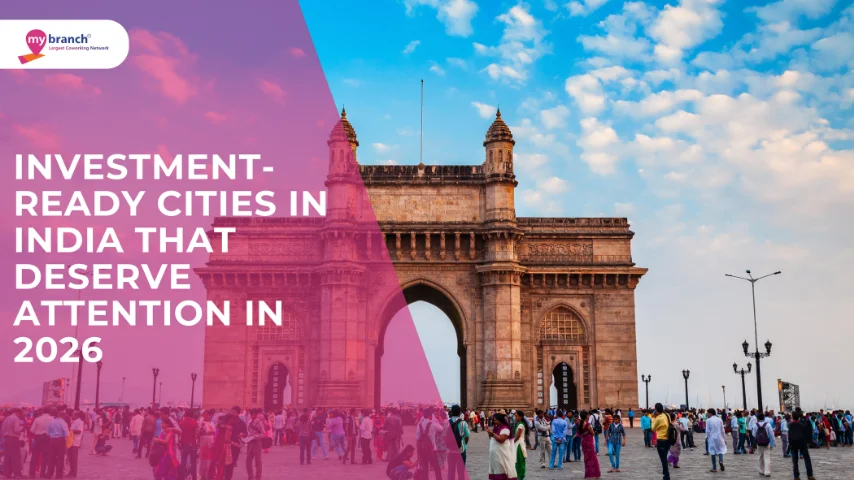
India's investment landscape is entering a new phase. While Mumbai, Bengaluru, Delhi NCR and Hyderabad continue to dominate discussions around business expansion, investors are increasingly looking beyond these established markets. Strong infrastructure, supportive government policies, expanding industrial corridors, and a growing pool of skilled professionals are creating opportunities in cities that were once considered secondary business destinations.
This shift is changing how businesses evaluate expansion strategies. Instead of focusing solely on the largest metropolitan areas, companies are assessing where they can access talent, reduce operational costs, strengthen supply chains, and position themselves closer to emerging customer markets. In 2026, investment readiness is no longer defined by city size alone—it is shaped by long-term economic resilience, connectivity, industry diversification, and the ability to support sustainable business growth.
What Makes a City Investment Ready?
A city becomes investment ready when multiple factors work together to create an environment where businesses can establish operations, scale efficiently, and attract talent.
Reliable infrastructure is often the starting point. Well-connected highways, airports, metro systems, logistics hubs, and digital connectivity reduce operational friction and improve productivity. Equally important is access to utilities, industrial land, and commercial developments that can accommodate businesses at different stages of growth.
Economic diversification also plays a major role. Cities that depend on a single industry tend to face greater risks during economic slowdowns. In contrast, destinations with thriving manufacturing, IT services, engineering, logistics, healthcare, education, and financial services offer greater stability and resilience.
Another defining factor is the availability of skilled professionals. Universities, engineering institutions, management colleges, and technical training centers help businesses build strong teams without relying entirely on talent migration from larger metros.
Government initiatives further strengthen investment readiness. Programs such as PM Gati Shakti, Industrial Corridor projects, Startup India, Production Linked Incentive (PLI) schemes, state-level industrial policies, and ease-of-doing-business reforms continue to encourage both domestic and international investment.
Did You Know?
India continues to attract strong interest from Global Capability Centers (GCCs), with companies increasingly expanding beyond traditional metro cities to access skilled talent, lower operating costs, and modern infrastructure. Industry reports published during 2025–2026 indicate that Tier-2 cities are becoming an important part of long-term expansion strategies rather than merely serving as support locations.
Cities That Deserve Attention in 2026
1. Pune – Engineering Excellence Meets Innovation
Pune has steadily evolved into one of India's most balanced investment destinations. Known for its automotive heritage, the city has expanded into software development, engineering design, research, fintech, education, and manufacturing.
Its proximity to Mumbai, excellent road connectivity through the Mumbai-Pune Expressway, expanding metro network, and international airport development strengthen its business appeal. Pune also benefits from one of India's largest student populations, producing engineers, management graduates, and technology professionals every year.
The city continues attracting automotive manufacturers, EV companies, engineering firms, startups, and multinational R&D centers. Businesses looking for long-term growth often appreciate Pune's combination of industrial strength and innovation ecosystem.
2. Ahmedabad – Manufacturing and Financial Growth
Ahmedabad has emerged as one of western India's strongest business destinations. Traditionally known for textiles and chemicals, the city has diversified into pharmaceuticals, financial services, renewable energy, engineering, and electronics manufacturing.
Major infrastructure projects, industrial parks, improved urban transport, and its role within the Delhi-Mumbai Industrial Corridor have strengthened investor confidence. The Gujarat International Finance Tec-City (GIFT City) has further elevated Gujarat's profile among global investors.
Ahmedabad also offers comparatively lower commercial costs than several Tier-1 cities, making expansion financially attractive for growing enterprises.
3. Chennai – A Global Manufacturing Hub
Chennai remains one of India's most dependable investment destinations due to its diversified economy. The city combines automobile manufacturing, electronics, aerospace, healthcare, information technology, and port-led trade within a mature industrial ecosystem.
Its strategic coastal location provides strong export capabilities, while industrial corridors connecting Tamil Nadu's manufacturing clusters continue attracting domestic and international investment.
The growing semiconductor ecosystem, electronics manufacturing initiatives, and advanced engineering talent position Chennai for sustained growth in 2026. Businesses exploring office space for rent often value Chennai's balance between industrial strength and knowledge-based industries.
4. Hyderabad – Technology Beyond IT
Hyderabad's success extends well beyond software services. The city has become a major center for life sciences, pharmaceuticals, artificial intelligence, aerospace, data centers, gaming, and Global Capability Centers.
Large-scale infrastructure development, a business-friendly policy environment, and expanding metro connectivity continue to strengthen its attractiveness for investors. Hyderabad also benefits from internationally recognized educational institutions that consistently supply highly skilled professionals.
The city's commercial real estate market has matured significantly, giving businesses flexibility to scale according to operational needs.
5. Bhubaneswar – The Rising Knowledge Economy
Bhubaneswar has quietly established itself as one of eastern India's most promising investment destinations. While historically recognized for public sector institutions and education, it is now attracting investments in information technology, electronics, logistics, healthcare, and digital services.
Government support for startup development, smart city initiatives, and improved infrastructure has accelerated business confidence. Several technology companies have expanded operations here due to the city's educated workforce and comparatively lower operating expenses.
For companies seeking access to eastern markets while maintaining operational efficiency, Bhubaneswar deserves serious consideration.
6. Coimbatore – Quietly Building Industrial Strength
Coimbatore rarely dominates national investment discussions, yet it consistently demonstrates strong industrial performance. The city has deep expertise in engineering, textiles, pumps, precision manufacturing, healthcare, and emerging technology businesses.
A strong entrepreneurial culture, skilled manufacturing workforce, and expanding MSME ecosystem continue driving economic growth. Educational institutions across the region produce engineering and technical graduates who support both manufacturing and technology sectors.
As companies diversify supply chains and explore southern India beyond Bengaluru and Chennai, Coimbatore presents compelling long-term opportunities.
Infrastructure Is Reshaping Investment Decisions
Infrastructure development has become one of the strongest indicators of future investment potential.
Expressways, freight corridors, logistics parks, airports, multimodal transport systems, industrial corridors, and digital connectivity significantly influence where businesses choose to invest. Projects under PM Gati Shakti are improving connectivity between manufacturing hubs, ports, airports, and consumption centers, reducing logistics costs for businesses across sectors.
Modern infrastructure also encourages commercial development. As demand grows, developers are creating business parks, integrated commercial districts, technology campuses, and flexible office environments that support companies of varying sizes.
Talent Is Becoming the Biggest Competitive Advantage
Investment decisions increasingly revolve around people rather than property.
Cities that consistently produce engineers, designers, software developers, financial professionals, healthcare specialists, and skilled technicians provide businesses with a sustainable talent pipeline. Educational institutions, startup ecosystems, incubation centers, and industry collaborations all contribute to workforce quality.
Many emerging cities now retain local talent that previously migrated to larger metros. Improved quality of life, competitive salaries, and expanding career opportunities encourage professionals to build long-term careers closer to home.
This trend allows businesses to recruit effectively while reducing employee attrition associated with highly competitive metropolitan markets.
Story-Based Insight: Expanding Without Overcommitting
Consider a manufacturing company headquartered in Mumbai planning to establish an engineering support center in Pune while simultaneously expanding sales operations into Ahmedabad.
Instead of investing immediately in permanent infrastructure, the leadership begins with a managed office space that accommodates a small engineering team. As customer demand grows, the company evaluates larger office space solutions that allow gradual expansion without disrupting operations.
This phased approach reduces upfront investment, gives management flexibility to assess market conditions, and allows hiring teams locally before making long-term commercial commitments. Businesses across sectors are increasingly adopting similar strategies as they expand into multiple Indian cities.
Commercial Real Estate Is Becoming More Flexible
Commercial real estate has evolved considerably over the past decade. Businesses are no longer limited to conventional long-term leases or large office campuses.
Today's companies prioritize flexibility, scalability, and operational efficiency. Demand for premium commercial developments, business parks, and adaptable workplace models continues to grow across both Tier-1 and emerging cities.
Whether businesses require office space for rent during market entry or scalable workplace strategies for future expansion, commercial decisions are increasingly aligned with business objectives rather than fixed real estate commitments.
Practical Takeaways for Business Leaders
-
Evaluate cities based on long-term economic fundamentals rather than current popularity.
-
Study infrastructure projects that will influence business growth over the next decade.
-
Assess local talent availability before finalizing expansion plans.
-
Compare industry ecosystems relevant to your business sector.
-
Consider commercial real estate flexibility alongside cost advantages.
-
Explore scalable office space solutions before investing in permanent facilities.
-
Review state-level business incentives and industrial policies.
-
Build phased expansion strategies that allow gradual workforce growth.
Closing Reflection
India's investment story in 2026 is no longer centered around a handful of metropolitan cities. Businesses are recognizing that sustainable growth often comes from entering markets with strong infrastructure, skilled talent, diversified industries, and supportive policy environments.
Cities such as Pune, Ahmedabad, Chennai, Hyderabad, Bhubaneswar, and Coimbatore demonstrate that investment readiness is built over time through consistent economic development rather than short-term momentum. Each offers unique strengths, whether in manufacturing, technology, engineering, logistics, innovation, or commercial expansion.
For business leaders, investors, and entrepreneurs, the opportunity lies in looking beyond conventional choices. The most successful expansion strategies will be those that combine careful market evaluation with long-term thinking, enabling organizations to grow alongside India's rapidly evolving business ecosystem.
Frequently Asked Questions
What makes a city investment ready? +
A city is considered investment ready when it offers strong infrastructure, skilled talent, supportive government policies, diversified industries, quality commercial real estate, and long-term economic growth potential.
Which Indian cities are attracting the most investment in 2026? +
Cities such as Pune, Hyderabad, Chennai, Ahmedabad, Bhubaneswar, and Coimbatore are attracting increasing attention due to infrastructure development, industrial expansion, and growing innovation ecosystems.
Why are businesses expanding beyond traditional metro cities? +
Emerging cities often provide lower operating costs, improved infrastructure, better talent retention, and access to expanding regional markets while maintaining strong business ecosystems.
How important is infrastructure when selecting a business location? +
Infrastructure directly impacts logistics, employee mobility, supply chains, customer access, and overall operational efficiency, making it one of the most important factors in investment decisions.
How does commercial real estate influence expansion? +
Flexible commercial options allow businesses to scale operations efficiently while managing costs and adapting to changing business requirements.
Why is talent availability becoming a key investment factor? +
Access to skilled professionals enables companies to recruit efficiently, reduce hiring costs, support innovation, and sustain long-term growth.
What industries are driving growth in India's emerging business cities? +
Technology, manufacturing, electric vehicles, engineering, pharmaceuticals, logistics, electronics, renewable energy, healthcare, and Global Capability Centers are among the major growth sectors.
How should businesses evaluate a new city before expanding? +
Businesses should assess infrastructure, talent availability, industry ecosystem, commercial real estate, policy support, market demand, logistics, and long-term economic prospects before making investment decisions.