
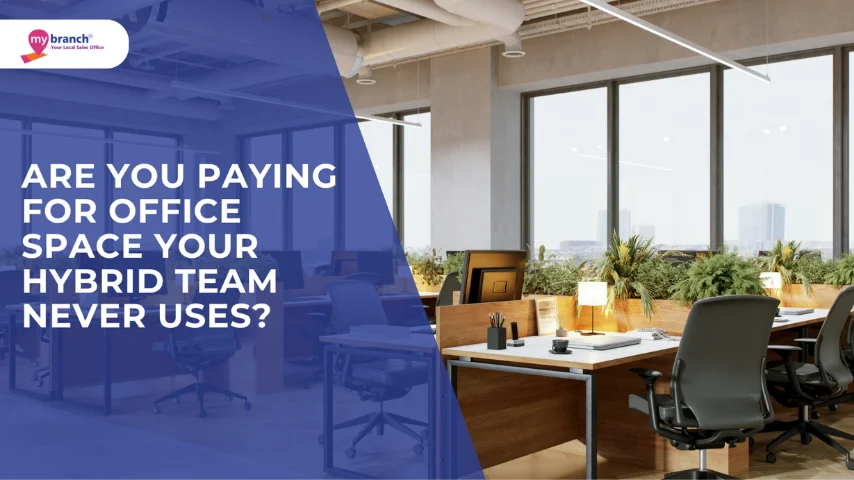
Take a walk through your office on a typical Tuesday morning. What do you see? A handful of people hunched over laptops in a cavernous room, a row of empty ergonomic chairs, and a glass-walled conference room that hasn't hosted a physical meeting in weeks.
Now, think about your monthly rent invoice. You’re paying for every single one of those empty square feet, every unused desk, and the electricity hum of a floor that is mostly a ghost town.
As we navigate the workplace realities of 2026, many business owners are realizing they are caught in a financial trap. In our rush to offer flexibility, we kept our old-school, rigid real estate footprints while our teams moved to a hybrid rhythm. The result? Companies are hemorrhaging capital on real estate that serves absolutely no purpose. Let’s look at why it’s time to audit your square footage and switch to a smarter setup.
The Rise of the "Ghost Desk"
The math behind the traditional office was simple: 50 employees meant 50 desks. But when your team is splitting time between their living rooms and a centralized hub, that math completely breaks down.
If your marketing team comes in on Mondays and Wednesdays, and your developers come in on Tuesdays and Thursdays, you are effectively paying for a "Ghost Desk"—a piece of furniture that sits empty for 50% to 60% of the workweek.
In a traditional commercial lease, you have zero flexibility to scale down when your office is empty. You are locked into a fixed footprint regardless of actual daily occupancy. For a growing business, this is a massive operational leak. Transitioning to a hybrid workforce office strategy allows you to break free from this rigid model, adapting your workspace to match your team’s actual calendar rather than a landlord’s contract.
The High Cost of "Just in Case" Space
When you look at your office overhead, the rent is just the tip of the iceberg. Think about the hidden costs that go into maintaining a physical headquarters:
-
High-speed commercial internet lines
-
Dedicated IT infrastructure and server rooms
-
Daily cleaning crews and facility management
-
The endless stream of coffee, snacks, and printer ink
Most founders keep a large office "just in case" they need to bring the whole company together for an annual AGM or a quarterly sprint. But does it make financial sense to pay for a 50-seater space for 365 days a year just to use it to its full capacity for 12 days?
By switching to a flexible managed workspace, you effectively outsource all that "just in case" infrastructure. You pay only for the core desks your team uses daily, while retaining the ability to rent larger meeting rooms or event spaces on-demand. You get all the perks of a premium headquarters with none of the maintenance headaches.
Reclaiming Capital for What Actually Matters
Let’s talk numbers. Real estate is typically the second largest overhead for a business after payroll. When you slash your unnecessary square footage, you instantly unlock liquid capital.
Imagine what your business could do if you redirected 30% of your office rent back into your growth budget. You could hire that senior developer you’ve been eyeing, launch a brand-new digital marketing campaign, or invest in premium AI tools to streamline your workflows. In 2026, financial agility is the ultimate competitive advantage. Businesses that tie up their cash in empty concrete are losing out to leaner, more responsive competitors who utilize cost-effective shared offices to keep their budgets fluid.
Designing for Energy, Not Attendance
The goal of a modern office isn't just to house bodies; it’s to foster collaboration. When employees walk into a massive, half-empty office, it actively drains their morale. It feels like working in a library after hours.
When you move your hybrid team into a right-sized, buzzing environment, the psychology changes. The collective energy of a shared hub creates a "productive hum" that motivates people to do their best work. You move away from monitoring "clock-in times" and focus instead on building an engaging, flexible culture.
The Takeaway: Stop Paying for Yesterday's Work Model
The five-day office week is gone, and it’s time for our real estate strategies to catch up. If you are still holding onto a traditional, long-term lease for a hybrid team, you are subsidizing empty space.
By embracing an agile, on-demand approach, you can provide your team with premium amenities, zero maintenance stress, and the exact amount of space they need—no more, no less. It’s time to stop paying for "ghost desks" and start investing in your business’s actual future.