
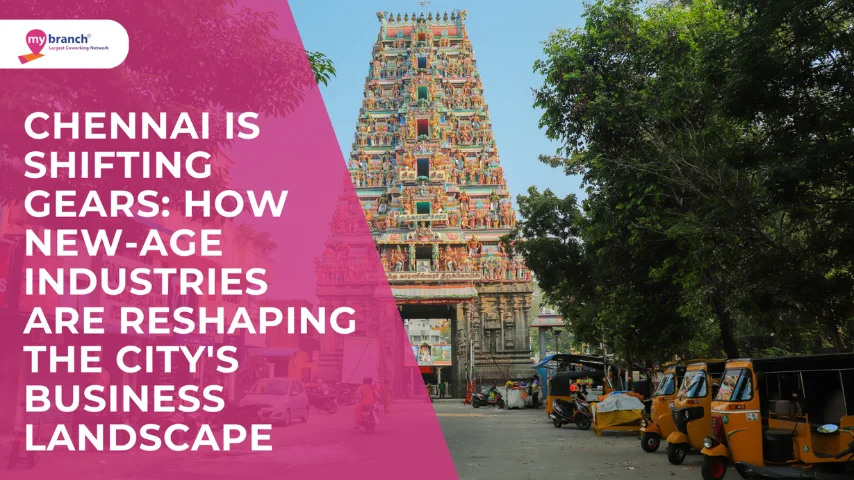
Walk through Sriperumbudur on a weekday and you will still see auto component trucks lined up outside factory gates. Drive twenty minutes toward OMR and the scene changes completely. Glass fronted buildings house fintech teams, GCC engineering floors and AI product groups working the same hours as their counterparts in London or Singapore. Chennai has not abandoned one identity for another. It is running both at once, and that is exactly what founders and business leaders need to understand before they plan their next move here.
How Chennai Built Its Business Base
Chennai earned its reputation as an industrial city decades ago. Automobile manufacturing took root in the region starting in the 1950s and expanded sharply after India opened its economy in the 1990s, when global carmakers set up plants around Sriperumbudur and Oragadam. Electronics manufacturing followed a similar path, turning the same industrial corridor into an assembly hub for smartphones and components. This gave Chennai something many newer tech cities lack. A deep base of engineers, technicians and process discipline built over two generations.
Did You Know?
Chennai hosts over 250 Global Capability Centres, accounting for around 10 percent of India's total GCC stock, according to a Ficci-Anarock report released in 2025.
Electric Vehicles Are Building on the Old Foundation
Tamil Nadu has positioned itself as India's leading electric vehicle manufacturing state, and Chennai sits at the centre of that shift. Hyundai has committed more than 26,000 crore rupees to the state through 2032 and is preparing to launch its first mass-market EV from its Chennai plant. This is not a new industry replacing the old one. It is the same supplier network, the same skilled workforce and the same port access being redirected toward electric drivetrains and battery components.
Global Capability Centres Are Changing the Talent Market
Financial institutions including Standard Chartered, JPMorgan and BNY Mellon run large technology operations from Chennai. These centres have trained a generation of engineers in global scale systems, and many of them are now founding or joining fintech startups. For a founder hiring in Chennai today, this means competing with GCC salaries and GCC level expectations around process and governance, even for an early stage team.
Fintech and Deep Tech Startups Are Drawing on That Talent
Chennai's startup activity spans healthcare, fintech and deep tech, including space technology ventures building on the city's engineering strength. What sets this ecosystem apart is that its talent pool did not come from nowhere. It came from years spent inside automotive plants, electronics factories and GCC delivery teams, which is why many of these startups skew toward hard technology rather than pure consumer apps.
What This Means for Businesses
A company evaluating Chennai today has to think beyond rent per square foot. Talent availability now varies sharply by skill and by neighbourhood. Engineering and manufacturing talent clusters around Oragadam and Sriperumbudur, while GCC and fintech talent concentrates along OMR and Taramani. Businesses expanding here should match their location choice to the skill set they are hiring for, not just to cost.
A Growing Engineering Team's Experience
A growing engineering team building automotive software recently needed office space quickly to onboard new hires from a GCC layoff round. Rather than sign a long lease before confirming headcount, the team used managed office space for the first year, expanding seats as hiring progressed. This let leadership commit to real estate only once demand was proven.
Challenges Businesses Should Consider
Growth in Chennai is not without friction. Grade A office space in prime micro markets is tightening, and rental rates have been rising year on year. Competition for specialised roles in AI, semiconductor design and EV engineering is intense, and commute times across the city's stretched geography can affect retention. Companies also need to budget for higher salaries in functions where GCCs set the benchmark.
Practical Takeaways for Founders and Leaders
-
Match your office location to the specific talent pool you are hiring from
-
Avoid long term lease commitments before hiring plans are confirmed
-
Budget salaries against GCC benchmarks in technology and finance roles
-
Track commute patterns when choosing between OMR, Taramani and the industrial corridor
-
Review office space solutions that allow you to scale seats without renegotiating a lease
Workplace Requirements Are Shifting Too
As hiring becomes less predictable, more businesses are choosing flexible formats before committing to permanent offices. Early stage teams testing Chennai often start with a coworking space in Chennai to establish a base without heavy upfront investment, then move to dedicated space once team size stabilises.
What to Watch Going Forward
Chennai's semiconductor and advanced electronics ambitions, along with continued EV investment, suggest the city's industrial and technology tracks will keep converging rather than competing. Business leaders should watch how infrastructure projects, including metro expansion and new industrial parks, affect which micro markets become viable for expansion.
Closing Reflection
Chennai's story is less about reinvention and more about layering. The city is using decades of industrial experience as the foundation for newer, higher value work. For businesses considering Chennai, the practical question is not whether the city is changing, but whether their own hiring plans and workplace decisions are flexible enough to keep pace with how quickly its talent map is shifting.
Frequently Asked Questions
What is actually changing in Chennai's business landscape? +
he city is adding electric vehicles, fintech, deep tech and expanded GCC activity on top of its existing automotive and electronics manufacturing base, rather than replacing those industries.
Why is Chennai attracting these new industries? +
Its existing supplier networks, port access, engineering talent pool and state level policy support for EVs and semiconductors make it a practical extension of industries already established there.
Who is most affected by this shift? +
Founders hiring specialised talent, SMEs supplying larger manufacturers, and HR leaders competing with GCC salary benchmarks all feel the effects directly.
Does this mean traditional manufacturing is declining? +
No. Manufacturing remains central to Chennai's economy. New industries are largely building on the same industrial base rather than displacing it.
What should a business consider before expanding into Chennai? +
Location relative to the relevant talent cluster, realistic hiring timelines, and whether a flexible workplace format makes sense before committing to a long term office.