
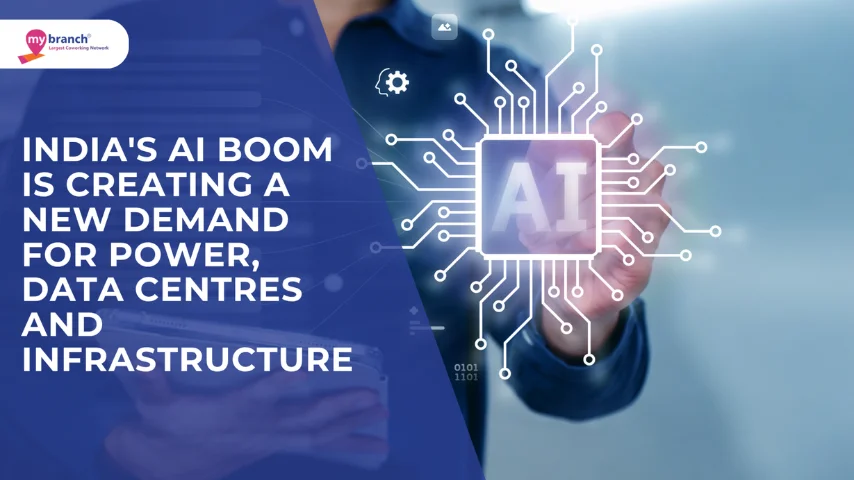
AI is often described in terms of software and models. But every AI system runs on physical infrastructure, a data centre, power connection and cooling.
India's growing AI adoption is creating fresh demand for this physical layer, data centre capacity, electricity and connectivity, alongside the technology itself.
How India's AI Growth Is Changing Infrastructure Demand
AI workloads, especially training large models, need far more computing capacity than typical applications, raising demand for servers, storage and specialised facilities that can scale with adoption.
Did You Know?
India's data centre capacity has grown from around 375 MW in 2020 to about 1,575 MW today, per government figures. Estimates project 6.5 GW by 2030, a sign that computing infrastructure is going mainstream.
Why Data Centres Are Becoming Critical
Data centres are where AI computing happens. Location matters because proximity to power and connectivity affects reliability and cost. Cooling matters because AI hardware generates heat, and scalability matters as facilities need to expand.
The Rising Power Requirement Behind AI
AI computing is more power intensive than most workloads, with a rack running AI training drawing several times more electricity than a standard rack.
The Ministry of Power has projected AI data centres could add around 26.3 GW of demand to the grid by 2031-32, a forecast, not a current figure, but one that shows why power planning is central to AI decisions.
Infrastructure Challenges Businesses Need to Watch
-
Power availability and grid capacity in the right locations
-
Transmission infrastructure to move electricity where needed
-
Cooling and water requirements for dense facilities
-
Land availability near power and connectivity
-
Construction timelines and rising costs
A growing technology business may initially focus on software and hiring, then start thinking about computing, storage and connectivity earlier than expected as usage grows.
What This Could Mean for Businesses
This build out could create opportunities beyond AI companies, from data centre operators and energy firms to developers and connectivity providers.
Businesses expanding into emerging hubs, especially Tier II cities, often need workspace before committing to property. This is where managed office space and office space solutions support faster expansion. Some teams use a virtual office for a registered address before taking on physical space.
Practical Takeaways for Business Leaders
-
Plan infrastructure requirements alongside technology growth
-
Evaluate power reliability before choosing a location
-
Consider connectivity strength as a location factor
-
Plan for future computing and storage scalability
-
Consider flexible options like managed office space or virtual office when needs are still evolving
Closing Reflection
India's AI opportunity is often discussed through talent and applications. Its real trajectory depends just as much on power availability, data centre capacity and physical infrastructure. Businesses that plan for this early, rather than as an afterthought, are likely to be better positioned as India's AI infrastructure takes shape.
Frequently Asked Questions
Why does AI require more data centres? +
AI workloads need far greater computing capacity, pushing demand toward larger, specialised facilities.
How is AI increasing electricity demand in India? +
AI training and dense clusters consume significantly more power per unit than conventional workloads.
Why is power infrastructure important for AI growth? +
AI facilities run continuously, making grid capacity and renewables central to reliable expansion.
What infrastructure challenges could affect India's AI expansion? +
Power, transmission, cooling, water and construction timelines could all affect how fast capacity is built.
What can businesses do to prepare for growing infrastructure needs? +
Plan requirements early, evaluate locations by power and connectivity, and stay flexible.