
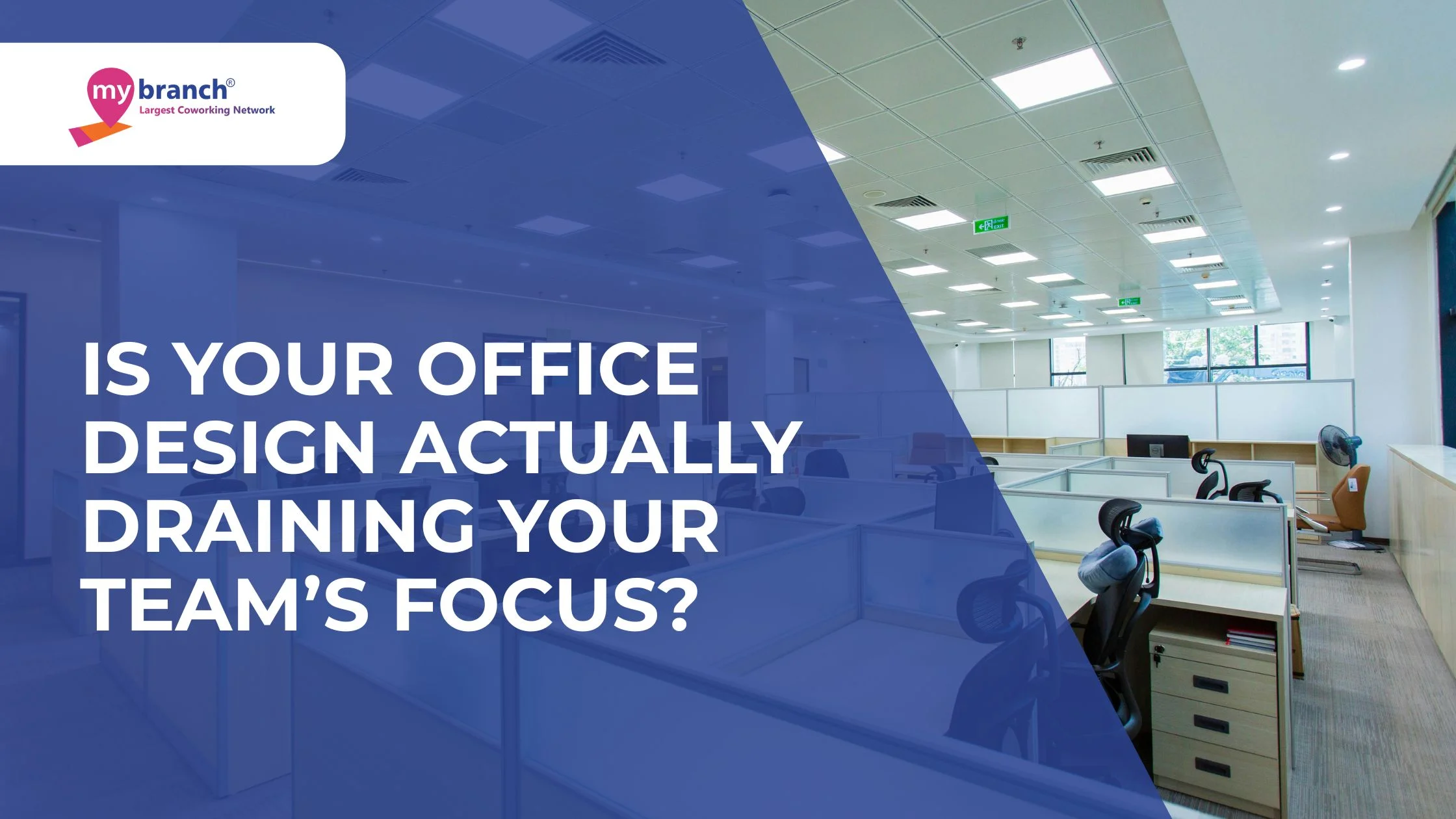
Take a quick look around your workspace right now. What do you see? Is it a sea of gray cubicles? A chaotic open floor plan where you can hear every single phone call your colleague makes? Or perhaps a cluttered desk that feels more like a storage unit than a place of inspiration?
If you feel like your "to-do" list is turning into a "to-don't" list, the problem might not be your work ethic. It might be the walls around you. In the race to maximize square footage, many businesses have accidentally created "focus deserts"—environments where deep work goes to die.
Let’s dive into why your office design might be the silent productivity killer you never saw coming, and how you can flip the script.
The Myth of the "Collaborative" Open Plan
A few years ago, the open-office trend took the world by storm. The idea was beautiful: tear down the walls, encourage "spontaneous collisions," and watch the innovation flow.
The reality? It mostly just encouraged people to buy bigger noise-canceling headphones.
When humans are in an environment where they are constantly "on display" or subject to ambient noise, their brains stay in a state of low-level hyper-vigilance. You aren’t focusing on that report; you’re subconsciously tracking the conversation about last night’s football game happening three desks away. This cognitive load drains your mental battery before lunch even hits.
1. The Power of "Zoning"
The most successful modern workplaces understand that work isn't a monolith. You don't do the same type of task all day, so why should you stay in the same type of space?
This is where the concept of premium managed office space really shines. Instead of a one-size-fits-all room, high-performance offices are moving toward "Activity-Based Working." This means having:
- Deep Work Zones: Library-style quiet areas where phones and talking are strictly prohibited.
- Social Hubs: Vibrant breakrooms or cafes where collaboration is encouraged.
- Meeting Pods: Small, soundproof nooks for those quick 15-minute syncs that don't require a massive boardroom.
2. Lighting: More Than Just "Seeing"
Are you working under the harsh, flickering hum of industrial fluorescents? Or worse, in a windowless corner where you lose all track of the sun?
Lighting dictates our circadian rhythms. Poor lighting leads to eye strain, headaches, and a massive dip in cortisol—the hormone that keeps us alert. A focus-friendly office prioritizes natural light. If that’s not possible, "warm" LED lighting that mimics daylight can drastically reduce afternoon fatigue. When a team feels physically comfortable, their ability to sustain focus for long periods skyrockets.
3. The "Hassle" Factor
Sometimes, focus isn't drained by noise, but by friction. Think about the last time you tried to start a meeting. Did you spend the first ten minutes looking for a dongle, struggling with the Wi-Fi, or trying to find a clean whiteboard marker?
This administrative "noise" is a massive drain on morale. This is a primary reason why many growing startups are shifting toward a serviced workspace. When the internet is enterprise-grade, the coffee is always hot, and the IT infrastructure is handled by pros, your team's "brain power" is reserved entirely for the work that actually moves the needle.
4. The Psychological Safety of Privacy
We’ve all been there: you’re working on a sensitive financial sheet or a creative draft, and you feel someone hovering behind you. That "shoulder-surfing" feeling kills creativity.
Even in a shared office space, privacy matters. Future-ready designs incorporate frosted glass, high-backed acoustic sofas, and strategic plant placement to create "visual privacy." When an employee feels that their screen and their space are secure, they are much more likely to take the creative risks necessary for a breakthrough.
5. Bringing Nature Indoors (Biophilia)
It sounds simple, but a few plants can change the entire energy of a room. Biophilic design—the practice of connecting a workspace with nature—has been proven to reduce stress by up to 15%. Whether it’s a living green wall or just a few well-placed succulents, greenery softens the "corporate" edge of an office and makes it feel like a place where humans (not just machines) belong.
Is it Time for a Change?
If your current setup feels like a hurdle rather than a launchpad, it might be time to rethink your environment. You don't necessarily need a multi-million dollar renovation. Sometimes, the solution is moving your team into a good coworking office space that has already mastered these design principles.
A great office should be like a great pair of shoes: you shouldn't even notice you're wearing them, but they should support every step you take.
Does your current office inspire you to do your best work, or are you just counting the minutes until you can leave? It might be time to stop fighting your environment and start choosing a space that works as hard as you do.