
Most office cost conversations in Pune stop at the rent per square foot. That is the wrong number to start with. The real cost of a conventional lease is built from at least six separate line items, and most businesses only discover all of them after they have signed.
Pune is one of India's most commercially active cities for IT, manufacturing support, BFSI, and shared services. The office market here is mature, which means there is no shortage of options. What there is a shortage of is honest cost comparison between a conventional lease and a managed office setup. This is that comparison, using Pune-specific numbers, for a team of 15 to 25 people in 2026.
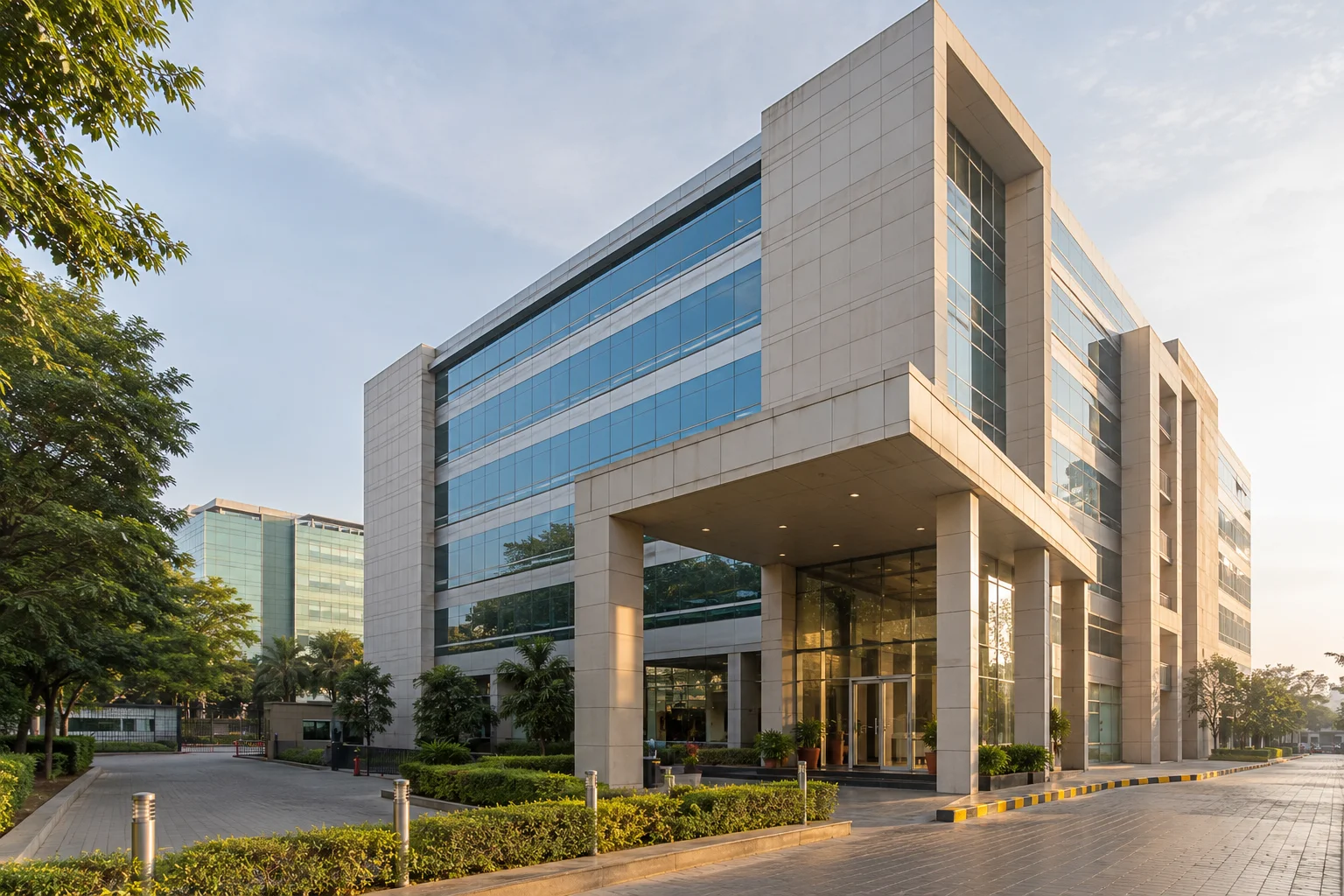
Office space in Pune's key corridors, Baner, Hinjewadi, Kharadi, and Viman Nagar, runs between Rs 55 and Rs 95 per square foot per month. A 15-to-25-person team pays Rs 82,500 to Rs 2,37,500 in monthly rent before anything else.
The headline rent is the smallest part. Security deposit runs Rs 9 to Rs 15 lakhs. Fit-out costs Rs 8 to Rs 18 lakhs. IT infrastructure adds Rs 2 to Rs 4 lakhs. Brokerage adds Rs 1.5 to Rs 3 lakhs. Total upfront capital commitment before the team is operational: Rs 20.5 to Rs 40 lakhs.
On top of that, maintenance and electricity run Rs 23,000 to Rs 60,000 per month as fixed costs regardless of how many people show up.
The Managed Office Numbers for the Same Team
Managed office space in Pune for a 15-to-25-person team runs between Rs 7,000 and Rs 12,000 per seat per month all-inclusive. For a 20-person team, that is Rs 1,40,000 to Rs 2,40,000 per month covering rent, maintenance, electricity, housekeeping, and basic IT infrastructure.
Security deposit is one to two months. On a Rs 1,80,000 per month managed office, that is Rs 1,80,000 to Rs 3,60,000 upfront. No fit-out cost. No brokerage. No IT infrastructure investment. The setup timeline is days, not months.
The total upfront commitment for the same 15-to-25-person team in a managed office in Pune runs between Rs 1.8 lakhs and Rs 3.6 lakhs. Against Rs 20.5 to Rs 40 lakhs for a conventional lease.
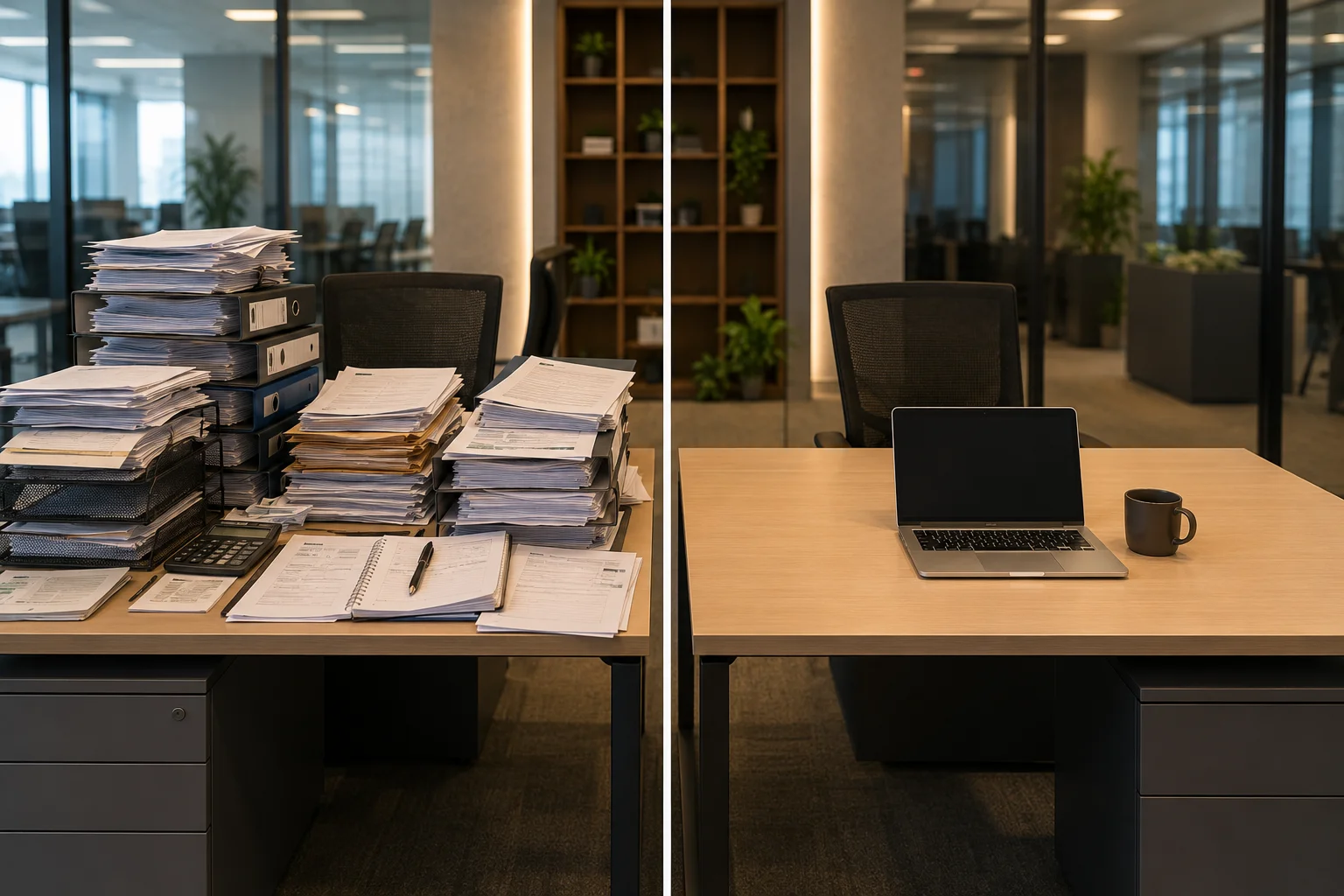
The Side by Side
| Cost Factor | Conventional Lease | Managed Office |
|---|---|---|
| Monthly Rent for 20 Seats | Rs 1,50,000 to Rs 2,37,500 | Rs 1,40,000 to Rs 2,40,000 |
| Security Deposit | Rs 9 to Rs 15 Lakhs | Rs 1.8 to Rs 3.6 Lakhs |
| Fit-Out Cost | Rs 8 to Rs 18 Lakhs | Zero |
| IT Infrastructure | Rs 2 to Rs 4 Lakhs | Zero |
| Brokerage | Rs 1.5 to Rs 3 Lakhs | Zero |
| Maintenance and Utilities | Rs 23,000 to Rs 60,000 per Month | Included |
| Setup Timeline | 2 to 4 Months | Days |
| Total Upfront Commitment | Rs 20.5 to Rs 40 Lakhs | Rs 1.8 to Rs 3.6 Lakhs |
The monthly costs are broadly comparable. The upfront commitment is not. The difference of Rs 18 to Rs 36 lakhs in capital that does not need to be committed in a managed office is hiring budget, product investment, or simply the working capital buffer that keeps a growing business stable through a slow quarter.
What the Numbers Do Not Show
The table above captures the financial comparison. It does not capture the flexibility gap, which is where the managed office case gets stronger still.
A conventional lease in Pune locks in a fixed team size for the duration of the agreement. If the business grows faster than projected, you are scrambling for additional space mid-lease. If it grows slower, you are carrying empty desks at full cost. If a key contract ends or a project winds down, the lease does not wind down with it.
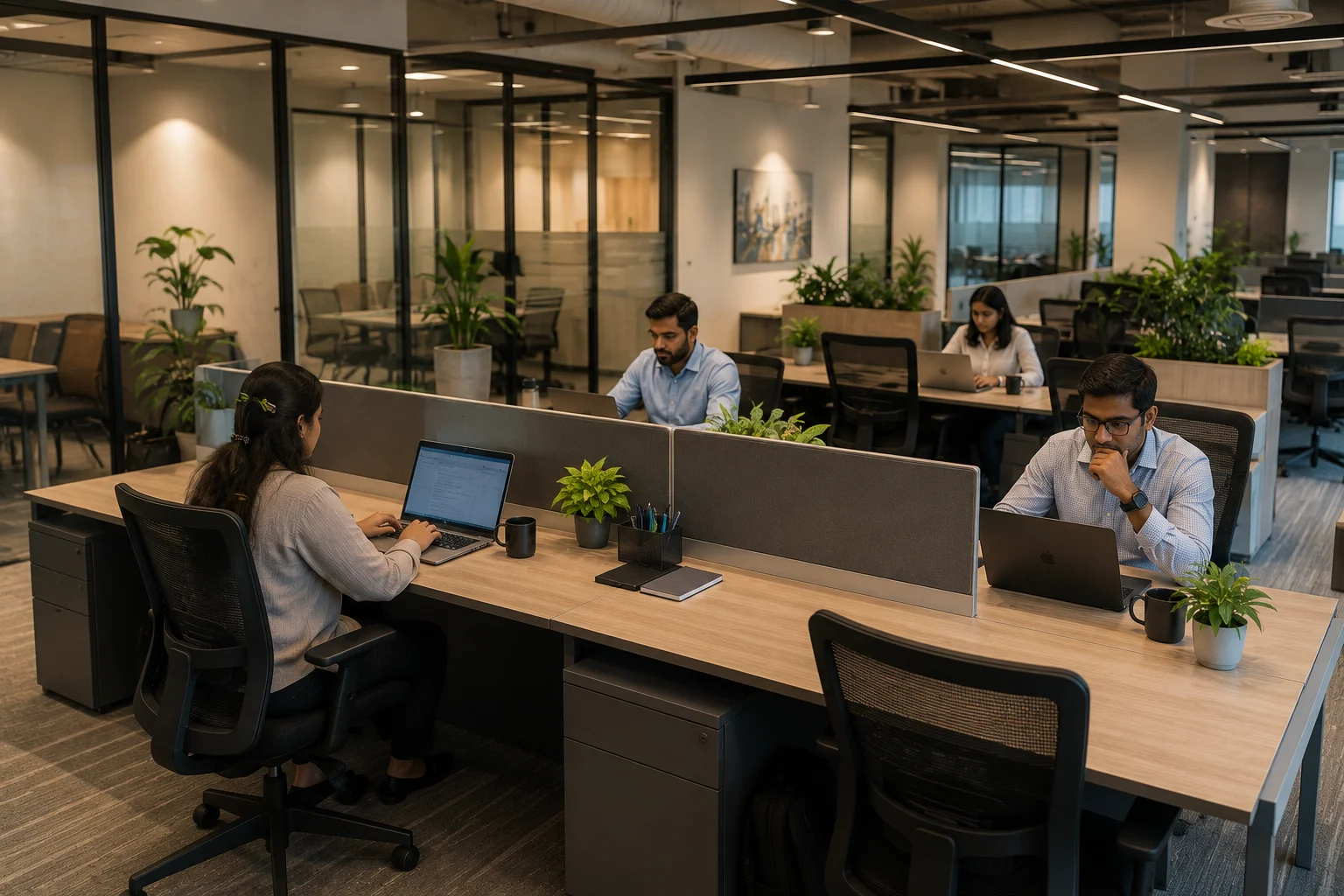
Coworking space in Pune absorbs all of that variability. Seat count adjusts as the team changes. There is no penalty for scaling back during a slow quarter and no emergency search for space when growth accelerates. For businesses whose headcount is tied to project wins, client contracts, or hiring cycles rather than a fixed annual plan, that flexibility has direct financial value that does not appear in any cost comparison table.
When a Conventional Lease Still Makes Sense
This is not an argument that managed offices are always the right answer. They are not. A conventional lease in Pune makes sense when the team size is stable and predictable for the foreseeable future, when the business has specific branding or fit-out requirements that a managed office cannot accommodate, or when the company has reached a scale where the per-seat economics of a conventional lease become more favorable than managed office pricing, typically above 50 to 60 seats in Pune's current market.
For businesses below that threshold, or for any business entering Pune for the first time and still learning what it actually needs from a Pune office, the managed model protects capital and reduces risk without compromising on professional credibility or operational functionality.
The Decision Framework
Ask three questions before signing anything in Pune.
- How certain are you about your team size in twelve months? If the honest answer is moderately certain or less, a conventional lease is a bet you are making on a projection you cannot fully support.
- Do you have Rs 20 to Rs 40 lakhs of capital that is better deployed in an office deposit and fit-out than in the business itself? For most growing companies, the answer is no.
- Does your business have specific requirements such as branding, fit-out, or dedicated server infrastructure that a managed office genuinely cannot meet? If yes, a conventional lease may still be right. If not, the managed office is the more rational choice.

The most expensive office decision in Pune in 2026 is not the one with the highest rent. It is the one that locks the most capital into infrastructure before the business has enough certainty to justify it.