
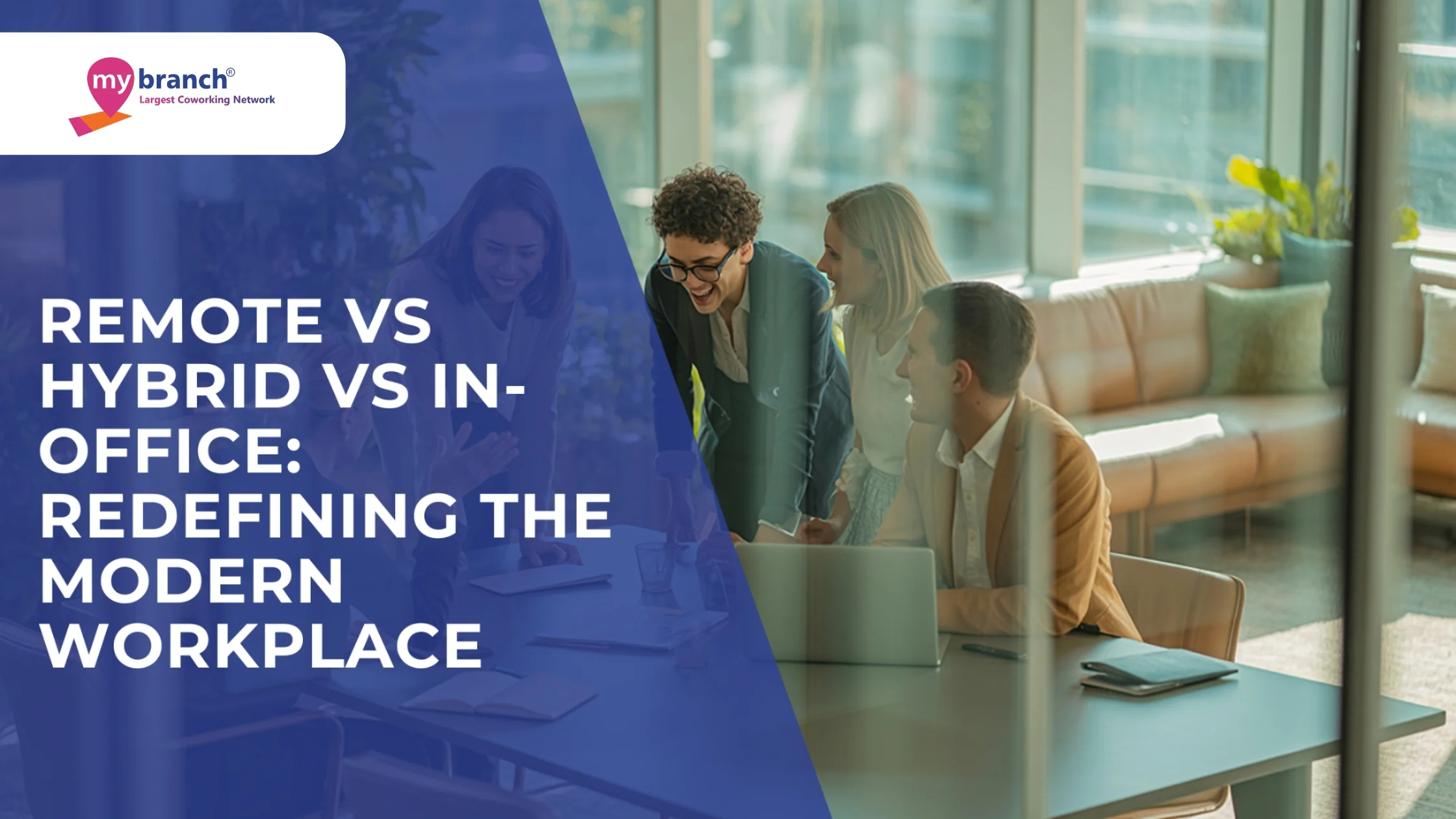
The way people work today looks very different from what it did just a few years ago. Not long ago, “going to work” meant stepping into an office every morning. Today, work can happen at a desk at home, in a shared workspace, or in a company office and sometimes all three in a single week.
If you’ve ever wondered which model works best—remote, hybrid, or in-office—you’re not alone. Businesses across industries are asking the same question. And the answer isn’t as simple as choosing one over the other. It’s about understanding how each model fits into the larger picture of productivity, people and growth.
The Shift That Changed Everything
The modern workplace didn’t evolve slowly. It shifted almost overnight. What started as a temporary adjustment has now become a permanent change. Remote and hybrid work are no longer alternatives. They are now central to how companies operate.
Flexibility has become one of the most important factors for employees today. A large portion of the workforce now operates in hybrid or remote setups, with hybrid emerging as the most preferred model across industries.
This shift has pushed businesses to rethink not just where people work, but how work gets done.
Understanding the Three Models
Before choosing what works best, it helps to break down what each model really offers.
Remote Work: Freedom with Responsibility
Remote work allows employees to work from anywhere. It removes the daily commute and gives individuals more control over their schedules. For many, this means better work-life balance and fewer distractions.
But it also comes with its own challenges. Communication can feel scattered, team bonding requires effort and new employees may find it harder to feel connected.
In-Office Work: Structure and Collaboration
The traditional office setup offers structure. It creates a clear boundary between work and personal life and makes collaboration more natural. Face-to-face interactions often lead to quicker decisions and stronger team relationships.
However, rigid office setups can feel limiting, especially for employees who value flexibility.
Hybrid Work: The Middle Ground
Hybrid work combines the best of both worlds. Employees split their time between working remotely and coming into the office. This model gives people the flexibility they want while still maintaining opportunities for in-person collaboration.
It’s no surprise that hybrid has become the most widely adopted approach across industries.
Why Hybrid Is Leading the Conversation
If there’s one clear takeaway from the current workplace landscape is that hybrid work is no longer a trend. It’s the new standard.
Companies are realizing that productivity isn’t tied to a location. Instead, it’s driven by how effectively teams can collaborate, communicate and stay aligned. Hybrid models support this by offering flexibility without losing connection.
Employees in hybrid setups often report higher satisfaction because they can balance focused work at home with collaborative work in the office.
The Real Challenge Isn’t Location—It’s Experience
Here’s where the conversation shifts.
The debate is no longer about choosing between remote and office. It’s about creating a work experience that actually works for people.
Think about it.
An employee working remotely still needs structure.
An employee in the office still wants flexibility.
And a hybrid employee needs both without confusion.
This is where many businesses struggle. It’s not the model that fails. It’s the execution.
Companies today are moving towards:
- Results-driven performance instead of time-based tracking
- Flexible schedules instead of fixed routines
- Collaborative spaces instead of traditional office layouts
The focus is shifting from presence to purpose.
What Employees Really Want
At the heart of this shift is a simple idea—people want control over how they work.
Flexibility has become a key factor in job satisfaction and retention. Many employees now choose roles based on how adaptable the work model is.
At the same time, there’s a growing need for connection. Fully remote setups can sometimes lead to isolation, while fully in-office setups can feel restrictive.
This is why hybrid models strike a balance. They give employees the freedom to work independently while still offering moments of collaboration and engagement.
What This Means for Businesses
For businesses, this evolution brings both opportunities and responsibilities.
Flexible work models open doors to a wider talent pool. Companies are no longer limited by geography. They can hire the right people regardless of location.
At the same time, managing a distributed workforce requires the right infrastructure. Technology, communication tools and workspace solutions all play a critical role in making these models successful.
This is where managed workspaces and flexible office solutions become important. They allow businesses to scale up or down, offer employees a professional environment when needed and maintain consistency across teams.
The Role of Workspaces in the New Era
Even in a world where remote work is possible, physical spaces still matter.
But the purpose of the office is changing.
It’s no longer just a place to sit and work. It’s becoming a hub for collaboration, brainstorming and team building. Offices today are designed to bring people together, not just house them.
Flexible workspace providers are helping businesses adapt by offering solutions that support hybrid work without long-term commitments.
So, Which Model Works Best?
There’s no single answer and that’s the point.
The best workplace model depends on the nature of the business, the type of work being done and the preferences of the team.
What works for one organisation may not work for another. What suits one team may not suit another.
The future of work isn’t about choosing one model over the other. It’s about creating a system that adapts.
The Way Forward
The modern workplace is no longer defined by walls or desks. It’s defined by flexibility, experience and intent.
Remote, hybrid and in-office models will continue to coexist. But the companies that succeed will be the ones that focus less on where people work and more on how well they work.