

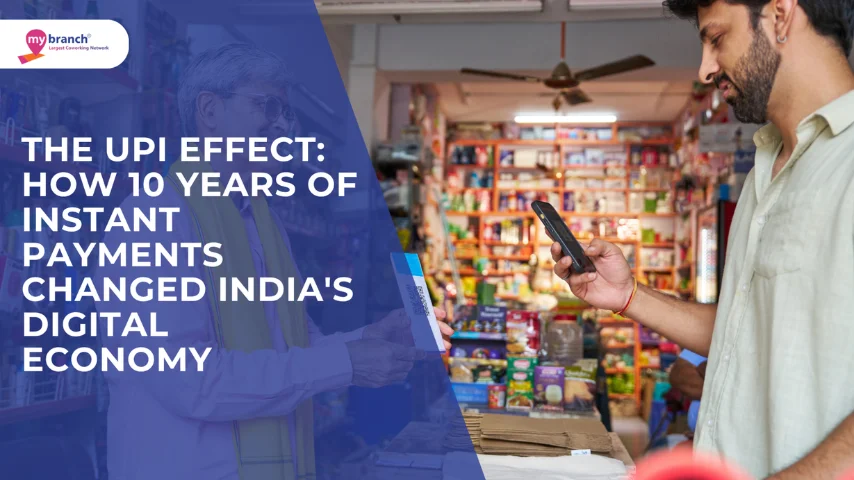
Ten years ago most transactions in India moved through cash, cards or bank transfers, and digital payments were not yet a daily habit for most people or businesses.
UPI arrived in August 2016, and payment behaviour shifted from occasional convenience to everyday default. A decade later, real time transfers are how India pays for chai, rent, inventory and services alike.
From Cash and Cards to Instant Payments
Digital payments once needed cards, POS machines or slow transfers. UPI removed most of that friction. A phone number or a QR code became enough to send or receive money instantly, and adoption spread quickly across cities, towns and rural markets.
Did You Know? According to NPCI data, annual UPI transaction volume grew from 1.78 crore in FY17 to more than 24162 crore in FY26, a nearly 13000 fold increase in a decade.
Why UPI Changed Everyday Transactions
Speed and convenience changed consumer expectations permanently. Splitting a bill, paying a vendor or sending money to family became a matter of seconds rather than a scheduled task.
QR based payments made this shift visible everywhere, from grocery stores to auto rickshaws, turning small daily transactions into digital ones by default.
The Business Impact of UPI
For SMEs and small merchants, UPI reduced cash handling and manual bookkeeping. Government data shows a large majority of small merchants surveyed now report UPI adoption.
Startups made UPI the default checkout, cutting drop offs linked to slow payment options. Many founders now treat payment experience as part of product design rather than a backend detail.
Many small businesses we observe follow a similar path. A retail shop that once relied only on cash adds a QR code at the counter, and within months most transactions move through UPI. The lesson is that instant payments need consistency, not a large transition.
UPI and India's Digital Economy
UPI became foundational infrastructure for India's digital economy, enabling ecommerce, fintech lending and digital bookkeeping to grow on a payment layer with existing trust.
Businesses operating from a shared office space or a managed office see this shift clearly, as vendor payments and client billing move through UPI rather than cash, simplifying financial tracking for growing teams.
What Comes Next for Digital Payments
UPI's international acceptance is expanding gradually across the Middle East, Southeast Asia and parts of Europe, mainly for travellers and remittances.
Credit integration, richer merchant data and stronger fraud prevention are expected to shape the next phase, while digital literacy and cybersecurity remain ongoing priorities.
Practical Takeaways for Founders and Business Leaders
-
Treat UPI as a default expectation, not an added option
-
Keep payment experience simple across online and offline channels
-
Maintain clear digital records for every transaction
-
Stay alert to fraud patterns and educate staff and customers
-
Prepare for evolving payment technologies rather than reacting later
Closing Reflection
The real impact of UPI is not only in transaction numbers. It lies in how quickly Indian consumers and businesses adjusted their expectations around speed, convenience and access.
A decade in, instant payments are no longer a feature people notice. They are simply how India transacts, and that shift in behaviour is the more lasting outcome.
Frequently Asked Questions
What is UPI and why did it become popular in India? +
A real time payment system using a phone number or QR code, removing the friction of cards and bank transfers.
How has UPI changed the way businesses accept payments? +
Even small merchants can accept digital payments without expensive infrastructure, using only a QR code and a bank account.
What are the main challenges associated with UPI? +
Fraud prevention, digital literacy and maintaining security as transaction volumes grow remain ongoing challenges.