
Growth doesn’t always fail because businesses move too slowly.
More often, it struggles because the structure arrives too late.
Growth Often Starts Before Structure Catches Up
Business expansion rarely follows a neat, predictable sequence.
More often, growth begins before formal structures are fully in place.
A new client from another region.
Early sales traction in an unfamiliar market.
Operational activity that moves ahead of official setup.
At this stage, most businesses function well operationally. What’s missing isn’t capability—it’s formal recognition. There’s no local address, no visible regional presence, no structural signal that says, “We are established here.”
This gap doesn’t immediately create legal risk.
It creates a credibility gap.
As highlighted across industry discussions on market entry and compliance readiness by bodies such as the Ministry of Corporate Affairs, formal presence increasingly shapes how businesses are evaluated across regions by regulators, partners, and institutions alike.
The Reality of Regional Expansion Today
Modern expansion is iterative, not linear. Businesses test markets before committing fully. Sales activity often begins well before infrastructure is formalized. Compliance tends to follow growth rather than lead to it.
Over time, however, this sequencing creates friction. Clients, partners, platforms, and even internal stakeholders begin to look beyond activity and towards legitimacy.
At that point, being operational is no longer enough.
Being formally present starts to matter.
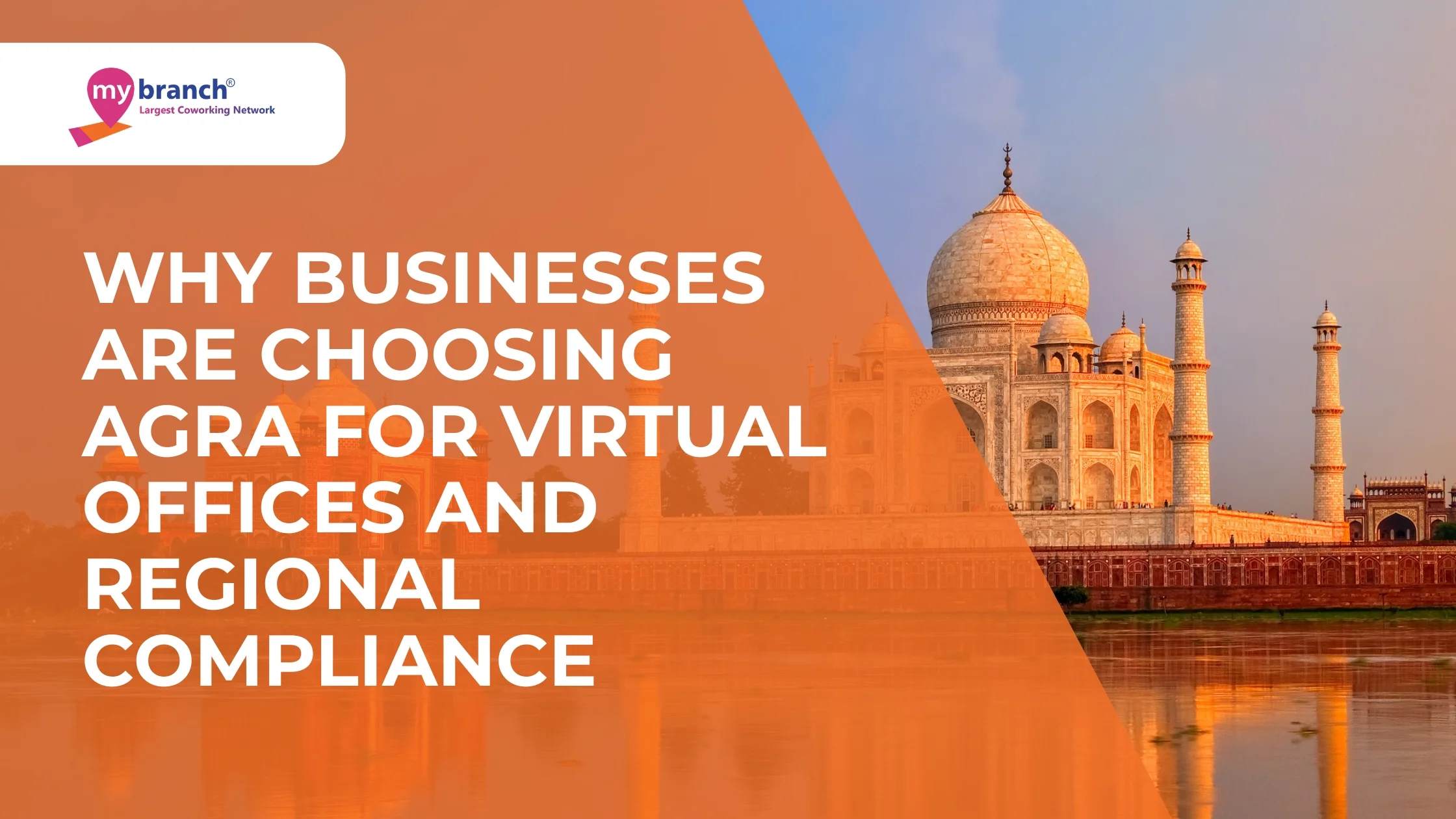
Why Agra Is Emerging as a Strategic Choice
Agra is not chosen because it is smaller or cheaper. It is being chosen because it is administratively practical.
For businesses expanding across North India, Agra provides:
- A stable administrative environment
- Clear and accessible registration processes
- Geographic relevance without metro-level complexity
- Professional credibility without operational noise
Agra succeeds not because it offers less,
but because it offers enough.
This is what makes it so attractive for businesses that want to establish a formal regional presence without committing prematurely to full-scale infrastructure.
Why Virtual Offices Fit This Phase of Growth
In the early stages of expansion, most businesses don’t need desks.
They require a presence.
Virtual offices facilitate this stage by enabling businesses to:
- Register a business address
- Develop a business identity in the region
- Be nimble until demand is confirmed
Rather than considering physical offices as the initial step, virtual offices serve as a transition between desire and investment.
This strategy is a direct reflection of how businesses are currently utilizing virtual offices for regional compliance and market entry, particularly in situations where credibility must be established prior to scalability.
Compliance Is About Trust, Not Just Paperwork
Compliance is merely paperwork.
It is a signal.
A business address is a statement of intent.
A planned setup instills trust.
Both contribute to the perception of the business by customers, partners, and the government.
Compliance is not merely an enabler.
It is an enhancer of trust, particularly in a new region.
Who This Quietly Works For
This approach tends to resonate with businesses that:
- Operate in services or consulting
- Run digital-first or platform-led models
- Sell across regions without heavy physical presence
- Validate demand before investing in infrastructure
These businesses aren’t optimizing for visibility.
They’re optimizing legitimacy.
Why This Trend Goes Beyond Agra
Agra is just one example of a larger change in how companies think about growth.
In cities, there is a growing trend for organizations to split apart:
- Presence from overhead
- Structure from scale
The trend of virtual-first, structure-led growth is becoming the norm. This enables organizations to establish formal structures early on but still have flexibility in their future plans.
Where This Comes Together
At this stage of growth, most businesses aren’t looking to make real estate decisions.
They’re trying to close the gap between operating in a market and being formally recognized within it.
This is where the importance of structured and low-friction solutions comes into play. Rather than opting for physical offices too soon, organizations are now adopting solutions that help them lay down compliant foundations without locking them into rigid structures.
In cities like Agra, this allows businesses to test growth, validate demand, and build credibility while keeping operations adaptable.
It’s not about adding space.
It’s about adding structure at the right moment.
Conclusion: Expansion Is Also About Being Recognised
Growth isn’t always about moving faster.
Sometimes, it’s about being recognized properly.
As businesses rethink how they expand, cities like Agra will continue to matter, not as symbols of ambition, but as foundations of credibility.
Because sustainable expansion isn’t just about where you grow.
It’s about how you show up when you do.