
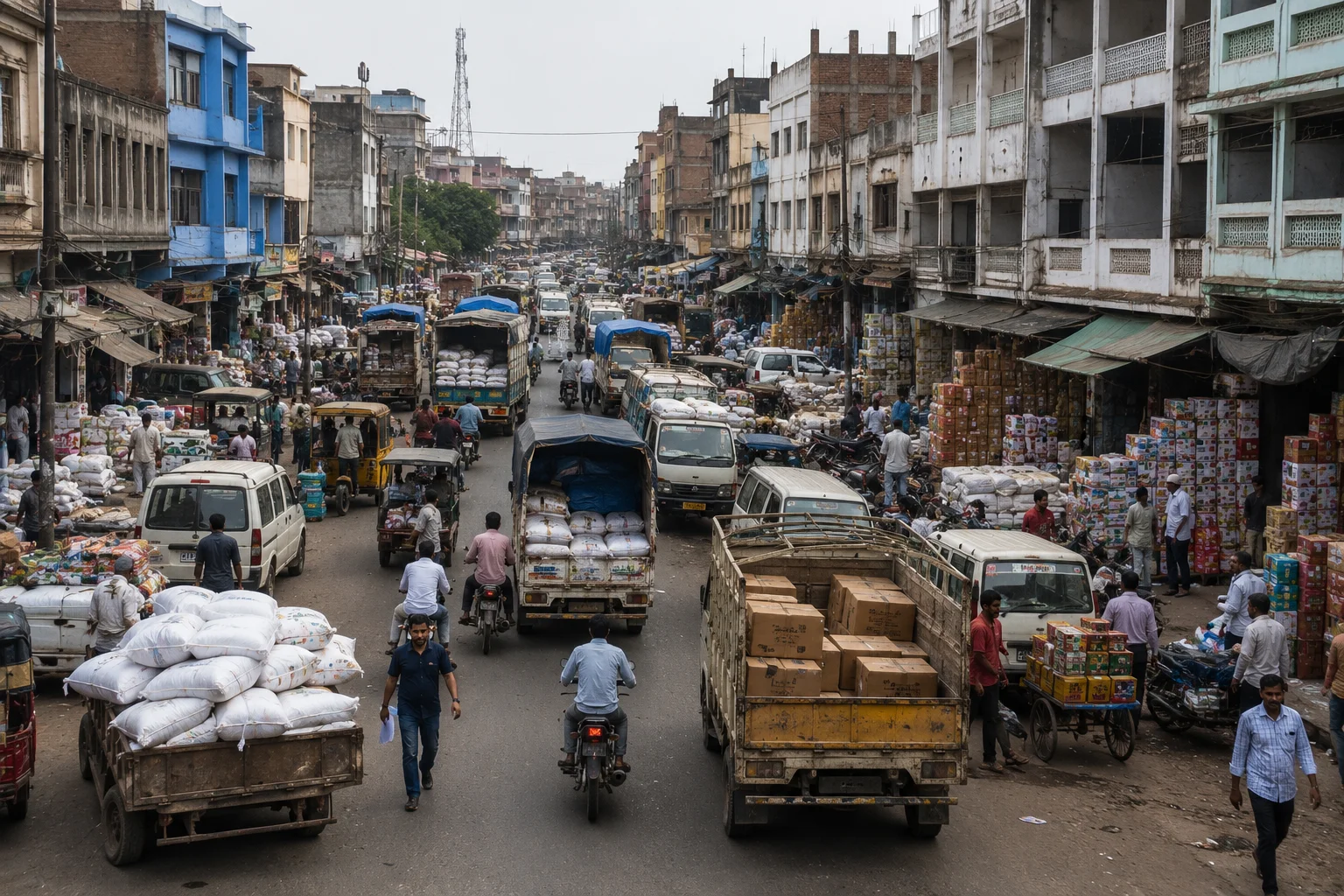
Every FMCG firm with a North India distribution strategy has a version of the same problem. The goods move well. The trucks are on the road. The distributor relationships exist. What does not exist is a proper operational base at the points along the corridor where the coordination actually needs to happen.
The result is regional managers working from cars, distributor meetings held in hotel lobbies, compliance documentation managed from WhatsApp, and GST filings handled by someone in head office who has never visited the market. It works until it does not. And in a corridor as commercially active as the stretch from Gurgaon through Agra to Varanasi, it tends to stop working at exactly the moment the business is trying to scale.
That is the problem a growing number of FMCG and distribution firms are solving in 2026, not by building expensive standalone offices at every point on the corridor, but by establishing lean, professional, compliance-ready bases at the three cities where operational coordination matters most.

Gurgaon: The Command Centre
The corridor starts, commercially speaking, in Gurgaon. This is where senior leadership sits, where national accounts are managed, and where the strategic decisions about the North India distribution network get made. Office space in Gurgaon runs between Rs 80 and Rs 150 per square foot per month in premium corridors. For a senior sales and national accounts team of eight to twelve people, a conventional lease carries an upfront capital commitment of Rs 15 to Rs 30 lakhs before the team has closed a single deal.
Coworking Space in Gurgaon Greenwood Plaza gives an FMCG firm's senior team a professional, credible base at a fraction of that upfront cost, with the flexibility to scale as the national accounts function grows. The Gurgaon office is not where the distribution work happens. It is where the distribution strategy gets set. It needs to be professional enough to signal credibility to enterprise clients and flexible enough to accommodate a team that is frequently in the field.

Agra: The Corridor Midpoint That Earns Its Place
Four hours south of Gurgaon on NH19, Agra sits at the geographic heart of the UP-distribution corridor. The Yamuna Expressway connects it directly to Delhi and Noida. The Agra-Lucknow Expressway opens the eastern UP market. NH19 runs through it toward Kanpur, Allahabad, and Varanasi. A regional office in Agra for FMCG firms means a distribution coordinator can cover a significant portion of western and central UP without the travel overhead of operating from either end of the corridor.
Coworking Space in Agra Sanjay Place gives a distribution team a compliance-ready base in the commercial center of the city, immediate operational setup, and seat count that adjusts as the territory develops. The practical value of an Agra base is easy to underestimate until you are trying to manage a distributor network across UP from Gurgaon alone. The geography forces the issue.

Varanasi: The Eastern Anchor That Most Firms Have Not Got To Yet
Varanasi sits at the eastern end of the corridor and is the city where most FMCG and distribution firms remain underinvested. Eastern UP is one of India's most populous and commercially underserved regions. The consumer market across Varanasi, Gorakhpur, and Azamgarh is substantial and growing. FMCG firms with distributor networks here are often managing them remotely from Lucknow or head office, which means the quality of distributor relationships and the depth of territory coverage are both lower than they could be.
Coworking Space in Varanasi Sigra puts a regional sales or distribution team in the city's most commercially accessible location. The low competition argument applies here more than anywhere else in the corridor. Most FMCG firms have not established a proper Varanasi base yet. The ones that do in 2026 are building distributor relationships and operational knowledge that will take later entrants years to replicate.
Running the Corridor as One Operation
The strategic value of treating Gurgaon, Agra, and Varanasi as a single corridor operation rather than three separate expansion decisions is significant. A national accounts team in Gurgaon that can escalate to an Agra coordinator who can reach a Varanasi field manager within the hour is a distribution operation that works. Managing the entire UP territory from a distance is one that struggles.
A coworking space network across all three cities makes that corridor operation executable without the capital commitment of three separate conventional leases. The format is consistent. The compliance infrastructure is in place at each point. Seat count adjusts as the territory develops. When Varanasi grows faster than expected or Agra needs to scale during peak distribution season, there is no new lease to negotiate and no empty office to carry.
The UP-distribution corridor has always been commercially important. What is changing in 2026 is that the office infrastructure to support it properly is finally accessible without the capital commitment that used to make it impractical. The firms building that infrastructure now are the ones that will define this corridor for the next decade.