
The dream of the permanent home office was, for a long time, the ultimate goal for the modern freelancer. No commute, total control over the thermostat, and the ability to work in silence. But as we move through 2026, a curious shift is happening. The very people who fought for the right to work from their living rooms are now voluntarily migrating back into communal environments.
It turns out that while "quiet" is good for concentration, it can be detrimental to momentum. Professionals are increasingly trading the isolation of home for the productive hum of shared spaces. But this isn't just about escaping the distraction of a noisy neighbor or a tempting refrigerator; it’s about a psychological and professional upgrade that only a communal environment can provide.
The Science of "Body Doubling": Why We Work Better Together
Have you ever noticed that you get more done in a bustling coffee shop than you do in a silent spare bedroom? There is a legitimate psychological phenomenon at play here known as "body doubling." Essentially, being in the presence of other people who are also focused on a task creates a passive form of accountability.
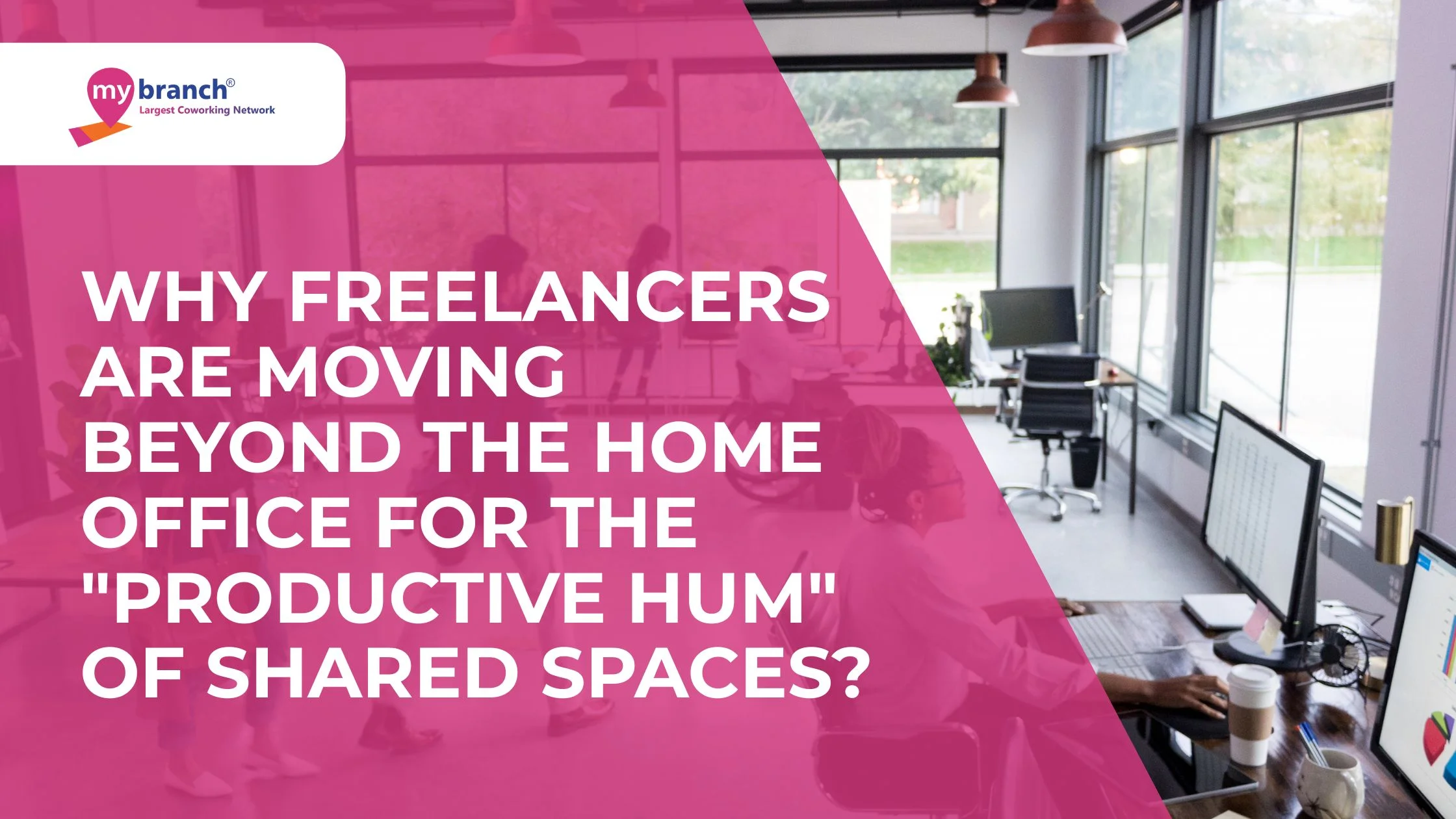
When you are at home, the only person watching you fall down a social media rabbit hole is your cat. In a professional coworking environment, you are surrounded by a collective energy. You don't necessarily need to be working with the people around you; simply seeing others in "deep work" mode signals to your brain that it is time to perform. This "productive hum"—the sound of keyboards, low-level chatter, and the clinking of coffee cups—acts as a white noise that actually sharpens focus rather than shattering it.
Curing the "Isolation Tax" on Creativity
For a freelancer, isolation is more than just a bummer—it’s a tax on creativity. Innovation rarely happens in a vacuum. It happens in the "in-between" moments: the conversation while waiting for the elevator, the shared frustration over a software update in the breakroom, or the quick exchange of ideas over lunch.
By choosing a collaborative workspace, you are effectively opening your business up to "serendipity-as-a-service." These spaces act as a physical LinkedIn. You might be a graphic designer sitting next to a copywriter, or a coder sitting next to a marketing strategist. These organic interactions often lead to new partnerships, referrals, and fresh perspectives that you simply cannot replicate through a Zoom screen. In 2026, the most successful freelancers are those who understand that their network is their net worth.
Drawing a Hard Line: The Mental Boundary
One of the biggest struggles of the home office is the "blur." When your office is ten feet from your bed, you never truly leave work, and you never truly arrive at home. This leads to a persistent state of low-level burnout.
Moving into a dedicated shared space allows you to reclaim your psychological boundaries. The physical act of "going to work" prepares your mind for the day ahead, and the act of leaving the building allows you to actually shut down. This separation is vital for long-term sustainability. Professionals are finding that they would rather pay for a desk and have a "clean" evening than work for free from a couch and feel "half-on" all night long.
The Infrastructure of Success
Let’s be practical: most home offices aren't equipped for high-level professional needs. In 2026, the technical requirements for a digital business have leveled up. A standard home Wi-Fi connection often struggles with high-bandwidth AI tools or 4K video conferencing.
Shared spaces offer premium business infrastructure that is cost-prohibitive for a solo operator. We’re talking about enterprise-grade internet, soundproof phone booths for private calls, and high-end meeting rooms that actually impress a client. Moving into these spaces isn't an expense; it’s an investment in your brand’s perceived value.
It’s About Human Agency
The move away from the home office isn't a retreat to the "old way" of working; it’s a step forward into a more intentional way of living. It’s about choosing an environment that serves your goals rather than just settling for the one that’s most convenient.
By stepping into the "productive hum," today’s professionals are finding that they don't just work faster—they work happier. They are rediscovering that work is a human endeavor, and we were never meant to do it entirely alone.