
Most businesses treat the meeting room as a fixed cost. It comes with the office; it sits there, and nobody questions it. That is exactly the problem.
Pull up your office lease. Find the square footage allocated to your meeting room. Now calculate what you are paying per square foot per month. Multiply that by twelve. What you have just found is the annual cost of a room that, in most Indian offices, sits empty for more than half the working day. That number tends to focus on the mind.

The Hidden Cost Nobody Is Calculating
The rent is just the start. A dedicated meeting room carries costs that compound quietly across the year.
Real estate in any decent commercial building in India runs between Rs 60 and Rs 150 per square foot per month, depending on the city and location. A standard eight to ten seat meeting room occupies roughly 250 to 350 square feet. That is between Rs 15,000 and Rs 52,500 per month in pure real estate cost before you have had a single meeting in it.
Add to that the AV equipment, the projector or screen, the video conferencing setup, and the maintenance contract that keeps it all working. Add the furniture depreciation on the table and chairs. Add the electricity for the air conditioning that runs whether anyone is in the room or not.
Now consider utilization. Industry data on meeting room usage in Indian offices consistently shows utilization rates below 40 percent. Which means for more than half of every working day, you are paying full cost for a room that is doing nothing.
What You Are Actually Paying Per Meeting
Here is a straightforward calculation most businesses have never done.
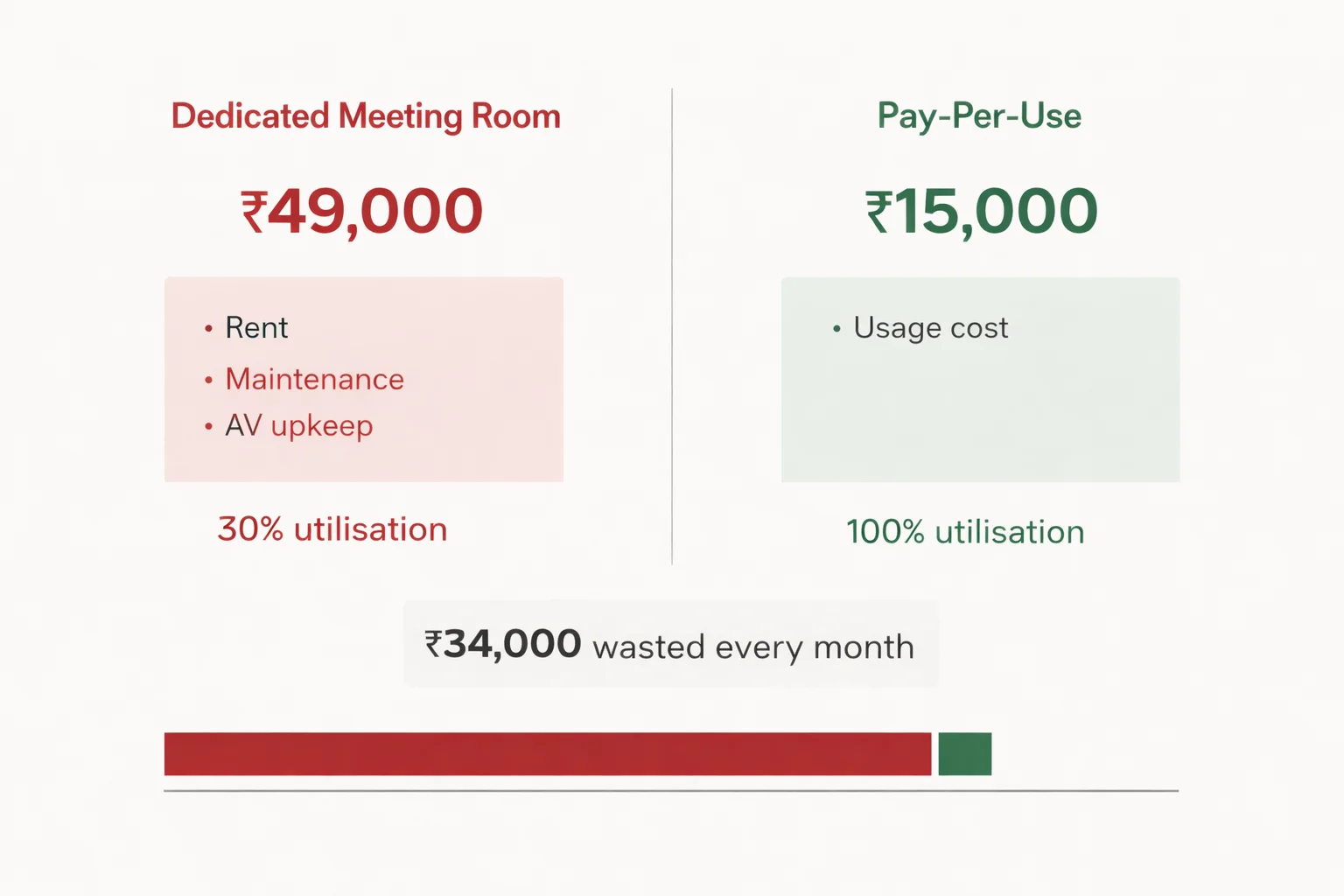
Take a mid-sized office in Bengaluru. Meeting room for real estate costs: Rs 30,000 per month. AV and maintenance: Rs 5,000 per month. Total dedicated cost: Rs 35,000 per month.
Assuming 22 working days a month and a realistic utilization of 35 percent, that room is in use for roughly 30 hours a month. Cost per meeting hour: Rs 1,166.
A professional meeting room for rent in the same city runs between Rs 500 and Rs 1,500 per hour depending on capacity and amenities. But you only pay for the hours you actually use. If your team needs meeting space for 15 hours a month, you pay for 15 hours. Not 22 working days of fixed overhead regardless of usage.
The numbers are not close when you do them honestly.
The Booking Problem Nobody Talks About
The cost calculation above assumes your meeting room is actually being used during those booked hours. It usually is not.
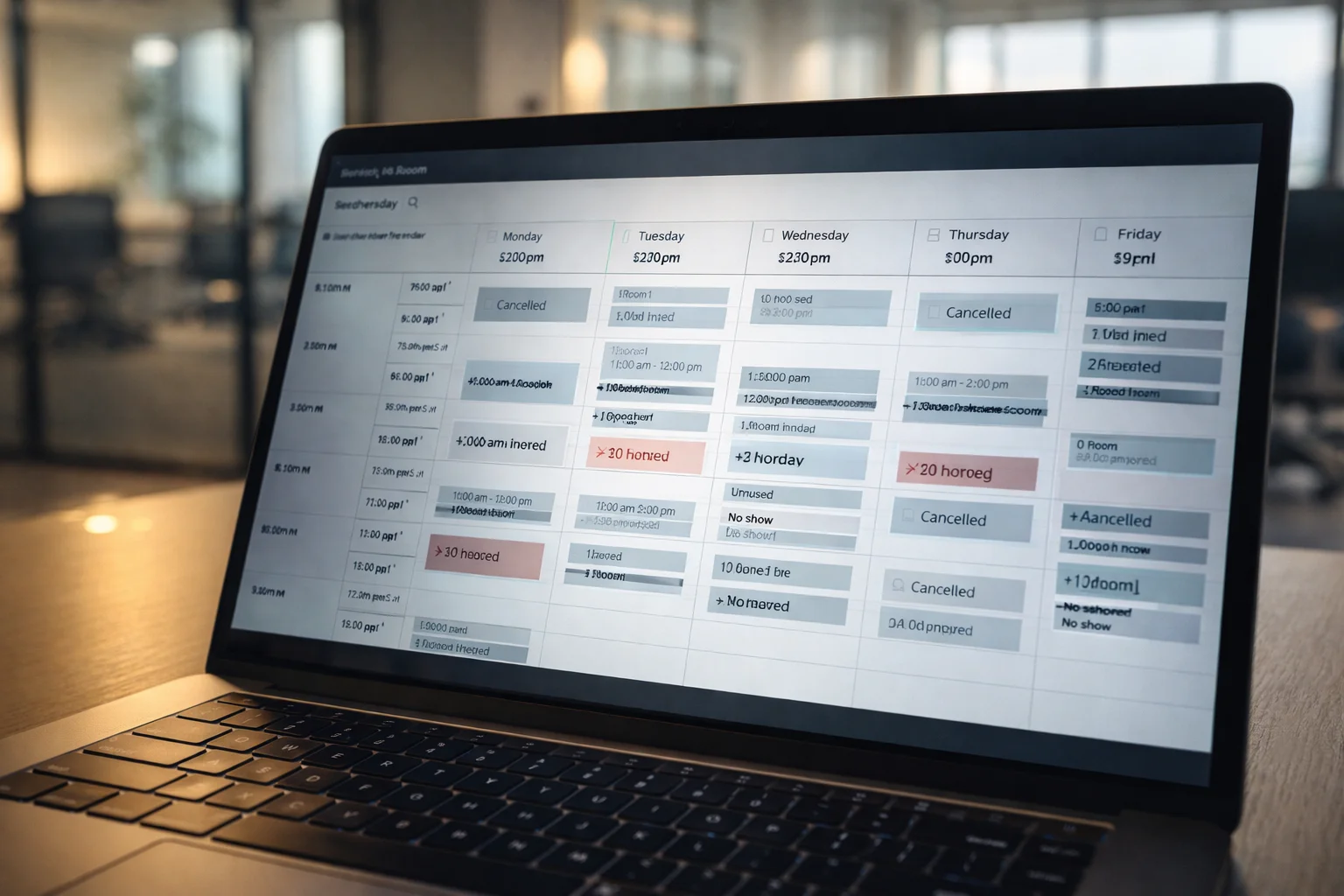
Room booking systems in most offices are full of ghost bookings. Someone books a room for two hours; the meeting runs for 40 minutes, and the room sits empty for the rest. Someone books a room, and the meeting moves to a call instead. Nobody cancels the booking. The room shows as occupied while sitting empty.
The administrative overhead of managing this is a real productivity drain. Someone is chasing bookings, resolving conflicts, and managing the calendar. That is time and attention being spent on room scheduling that adds zero value to the business.
What the Smart Alternative Looks Like
Pay-per-use meeting rooms solve every part of this problem at once.
You book the room when you have an actual meeting. You pay for the time you use. The room is professionally set up, AV-ready, and maintained by someone else. When the meeting is done, you leave. There is no fixed overhead, no maintenance contract, no depreciation schedule, and no ghost booking problem.
For businesses that meet clients occasionally, this is straightforwardly cheaper than maintaining a dedicated room. For businesses with hybrid or remote teams, it means a professional space is available when the team comes together, without paying for it on the days they do not. For companies expanding into new cities, it means a credible meeting environment in a new market before committing to a permanent office.
Who This Works Best For
Startups that pitch clients a few times a month do not need a permanent meeting room. They need a professional one when it matters.
SMEs with hybrid teams who use meeting space unpredictably are paying for predictability they do not need.
Field sales teams who need a credible base for client presentations are using hotel lobbies and coffee shops when a proper meeting room is available by the hour a few minutes away.
The pay-per-use model is not a compromise for businesses that cannot afford their own space. It is the more rational choice for any business that is honest about how often that space is actually needed.

How MyBranch Fits Into This
Access to professional meeting rooms across multiple cities, booked when you need them, without owning or maintaining any of them. For a business expanding into Nagpur, Jaipur, or Patna, that means a credible meeting environment is available from day one in each market. No lease is required. No setup timeline. No AV maintenance contract.
It is the meeting infrastructure of a large company without the overhead of one.
The question is not whether you can afford a dedicated meeting room. It is whether you can justify the cost of one that you are using less than half the time.